


In the wake of the unprecedented global pandemic, the traditional concept of work underwent a seismic transformation. As companies adapted swiftly to ensure business continuity, the remote work culture emerged as a lifeboat for many organizations. Surprisingly, this experiment with telecommuting not only proved to be successful but also reshaped the future of work. Today, a post-pandemic reality beckons, where the hybrid work model has taken center stage, offering employees the flexibility to divide their time between the office and home. However, to truly thrive in this new norm, it is essential to think differently about working in a hybrid world. In this article, we will explore 5 strategies and practices that can empower individuals and businesses alike to unlock the full potential of this transformative work environment.
1. Build Connection and Trust with your People
To build connections within the team, consider implementing a buddy system, where members are paired up for daily 5-minute calls to catch up and support each other. Conducting weekly heart-to-heart video calls allows participants to freely discuss whatever is on their minds. Additionally, creating shared virtual lunchrooms provides a space for informal gatherings and conversations akin to break room interactions.
For teams with members who have never met in-person or those with introverted individuals, organizing weekly team meetings for getting to know each other can be beneficial. Each week, featuring a different team member who presents something about themselves helps strengthen bonds. Encourage both formal and informal presentations, allowing time for preparation and thought, particularly for introverts or neurodiverse team members. You can use templates or encourage creative presentations, such as slideshows, to suit the team’s preferences. By nurturing a culture of connection, your team can thrive even in a virtual environment.
2. Set goals frequently make the specific and measurable
In order to foster a strong sense of unity within your team, it’s essential to avoid any division between “us” and “them.” Face-to-face connections whenever possible are crucial, especially incorporating social interactions where practical. When dealing with a mix of virtual and in-office team members, it’s vital to ensure that everyone can participate in meetings and connects to prevent feelings of exclusion. the hybrid work environment, the traditional annual goal-setting approach with periodic reviews no longer suffices. With reduced supervision and connection, employees find it challenging to keep up with changing client and organizational objectives, tactics, and strategies. To ensure effectiveness, dynamic and measurable goals must be adjusted more frequently to stay aligned with organizational objectives.
Empowering employees with autonomy while setting clear boundaries, authority, and accountability is vital for their success. Defining what excellence, good, and not acceptable performance look like provides a clear roadmap for achievement. Breaking tasks into manageable chunks and agreeing on specific timelines for each segment ensures progress towards the overall goal.
Ensuring goals are SMART (Specific, Measurable, Achievable, Relevant, Time-bound) adds clarity and precision, enabling employees to track their progress effectively. By adopting these strategies, organizations can adapt to the challenges of the hybrid environment and ensure their efforts remain relevant and impactful in achieving organizational objectives.
3. Make sure the goal is SMART – Aim for your team members to have no more than 2 meetings per day and make them count!
One of the most common complaints in the Hybrid Model, whether team members work 100% virtually, 100% in the office, or somewhere in between, is the overwhelming amount of time spent in meetings, leaving little time for actual work. To address this, creating a weekly or monthly meetings plan for each team member is crucial.
Start by identifying client meetings that are essential for team members to attend. Then, incorporate at least two personal connection type meetings each week to nurture relationships. With the remaining time slots, prioritize value-add or essential meetings for your employees.
To make meetings more effective and productive, send out agendas or relevant content in advance, allowing participants to prepare thoroughly. Set clear expectations for meeting duration and the level of contribution expected from team members. Keeping meetings on track by managing time and intervening when discussions go off-topic will help make every minute count. By implementing a well-structured meetings plan and optimizing meeting practices, teams can strike a balance between collaboration and focused productivity in the Hybrid Model.
4. Make time to talk and listen to your people about their Hybrid situation
As the Hybrid model introduces uncertainty, many individuals are grappling with concerns about what it means for them. Engaging in open conversations and actively listening to your team members is essential to gaining insight into their unique situations and anxieties. Following Stephen Covey’s wisdom, “Seek first to understand then to be understood,” fosters empathy and connection.
It’s completely natural for people to experience anxiety, especially about returning to the office, even part-time, as it aligns with the way human brains are wired. Some team members seek clarity on what the future holds and the opportunity to express their perspectives. Others find solace in being heard, which can significantly reduce anxiety during the initial phase of transitioning back to the office.
Certain team members face more significant challenges, such as no longer living near an office, enduring lengthy commutes, or contemplating relocation. Meanwhile, those who will predominantly work from home require assurances about job security and their value to the team.
Involving team members in the development of a hybrid workplan, setting clear expectations for work from home (WFH) and work from office (WFO), and addressing logistical issues like network connectivity, travel, client expectations, and deliverables, ensures a comprehensive approach to the hybrid work environment. Ultimately, incorporating team members’ insights and providing support and assurance will foster a sense of ownership and commitment to the new model.
5. Model the desired behaviours
Creating a culture of trust and empowerment within your team starts with you as the leader. Transparency allows team members to own their mistakes and voice their concerns, knowing it’s a cultural norm. Show empathy by caring for their well-being and making practical accommodations, and they will dedicate their energy to achieving shared objectives.
Foster an environment of vulnerability, where team members feel safe revealing their true selves and driving behaviors without fear of repercussions. Lead by example to build this psychological safety. Demonstrate accountability by owning up to your own mistakes and failures, inspiring team members to do the same and garnering their respect.
Be an advocate for your team, championing their ideas and advocating for necessary tools and technology to support their success. Recognize exceptional work and address unsustainable policies that may lead to burnout. As a leader, embodying these values nurtures a positive team culture, driving performance and fostering a sense of belonging and commitment among team members.
We are stoked to share the news of our brand-new ‘TransforMe Australia’ website.
by Sandra Colhando and Gatik Chaujer

We are stoked to share the news of our brand-new ‘TransforMe Australia’ website.
For our new friends, TransforMe is a transformative leadership training and coaching company in Australia, and worldwide, providing exclusive access to global coaches, trainers, and programs. In the last decade, we have worked with more than 150 global clients on their learning and leadership programs and the one thing that has remained unchanged is, our focus on driving real behavioural shifts and driving real business outcomes.
When we set out to rework our website, we saw it as an opportunity to revisit our product offerings and ensure they are aligned to the learning needs of employees and organisations specifically in Australia today.
Here are some facts that we deliberated while strategising our offerings for you:
- In 2 years from now, the skill sets required for doing the ‘same job’ will change by 44%. Which skills are going to be Most In-Demand Skills in Australia?
- Leaders and managers are struggling with burn-out and on how to manage hybrid teams effectively. We need to prioritise leadership skills that can help them build trust, connection and collaboration in a hybrid environment
- With a growing CALD (Culturally and Linguistically Diverse) population, there is a growing need for building inclusive workplaces. DEI is going to be crucial for business success to attract and retain a diverse talent pool
- Women Leaders need to bridge not just external, but internal barriers too, to drive strong presence at workplaces. Women Leadership programs are going to be key to grow the talent pipeline especially in senior leadership
- Learners feel less satisfied with current virtual learning environments finding them less engaging and hence having low participation and low attendance. We need to offer a higher quality learning experience that engages learners deeply and drives behavioural shifts
We were excited to discover that so much of what we do and how we do it is already in tune with present, and future, needs of L&D organisations in Australia.
Our portfolio of solutions cover Leadership, Management and Communication – the 3 among the top 10 Most In-Demand Skills in Australia.
We are well recognised for our high-impact leadership programs for leaders across 3 levels and our work in the space of team transformation.
Since our set-up here, Women Leadership and our Storytelling have been our best selling programs.
We recently launched a new program on Start-up Leadership tailored specifically to needs of start-ups (Read: Six Aussie startups that raised $34.2 million this week)
We are so proud of our facilitators and coaches who have their own lived experiences besides being highly accredited, do check out the new team page (don’t forget to hover on images for a surprise!)
We do hope you find our new website to be a useful resource in uncovering tailor-made learning and leadership solutions that align with your organization’s unique needs.
Oh, and speaking of feedback, we absolutely love hearing from you. So. please-please don’t hold back—do share your brickbats and bouquets with us.
Looking forward to it.
In a data-informed world, organizations look at data as their North Star. When it comes to gender diversity, it’s no different.
We intuitively know that women leadership is crucial for an organization’s success. We know that women leaders bring on-board a different set of skills, perspectives and context to problem solving.
Yet, the question persists. Is there data to support this? Does women leadership actually translate into real business impact?
The answer is a Big Yes. Consider these facts:
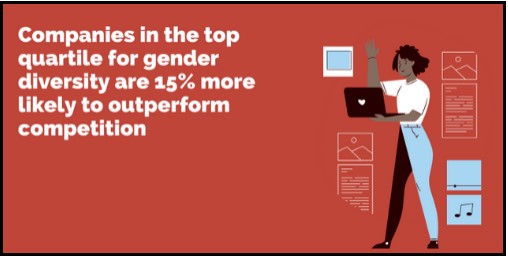
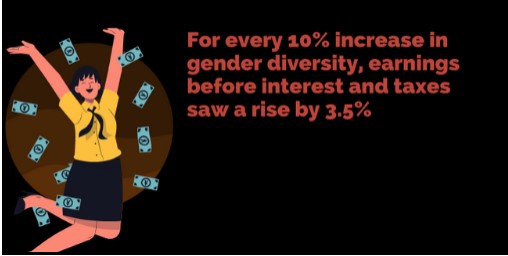
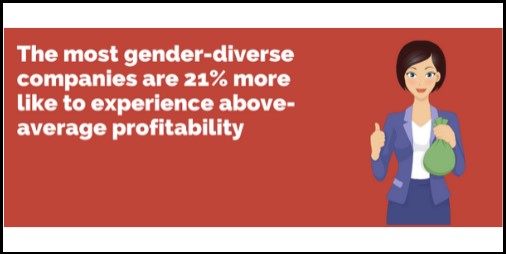
And that’s because women have emerged as more effective leaders in today’s world. There is no dearth of research on how women score equal or higher in most leadership skills. Women have proved to be better leaders during crises, including in managing the recent COVID-19 pandemic.
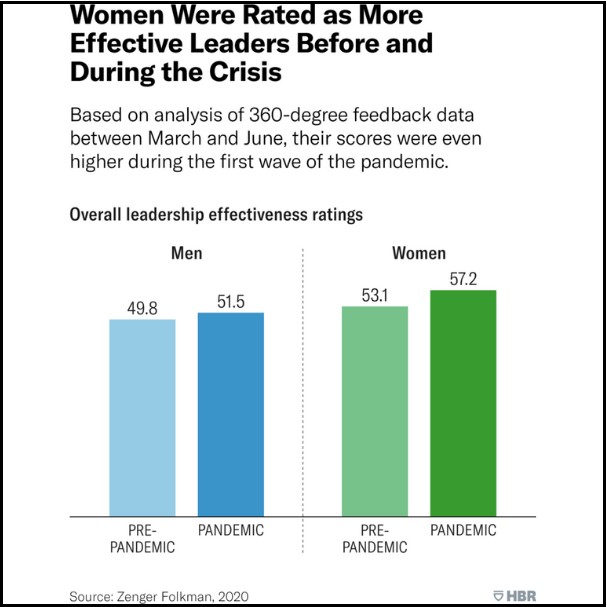

So you may ask what’s the issue?
As you discovered in this article, we have troves of data on how women have proved to be more effective leaders and that their presence leads to real business impact.
Unfortunately, the one place we wish we had better data to share is women’s representation in the workforce especially in leadership positions.
- Women represent 45% of the S&P 500 workforce, but only 4% are CEOs.
- Globally, women hold just 24% of senior leadership positions
- In a study of nearly 22,000 publicly traded organizations worldwide, 60% have no female board members.
Why is women's representation at work dismal?
A one size fits all approach does not work for women professionals as they find themselves confronted with some unique challenges at work.
In our conversations with women professionals, we hear them articulate so many of these challenges that are well-documented through research:
- Women leaders find themselves in a ‘double bind’ when gender stereotypes end up binding them in difficult situations
a. They are seen as too soft (likeable, but incompetent) or too tough (competent, but unlikeable) but never just right
b. The ‘think leader, think male’ mindset creates an invisible barrier for women where women leaders work twice as hard as men for the same recognition - “Senior-level women are also nearly twice as likely as women overall to be ‘Onlys’ -the only or one of the only women in the room at work. They are more likely than women who work with other women, to feel pressure to work more, and to experience microaggressions, including needing to provide additional evidence of their competence.”
- There are studies on how people and companies commonly misinterpret displays of confidence as a sign of competence, which tends to put men at a position of advantage as they come across as more confident
- COVID-19 pandemic has further intensified challenges that women already faced. Senior-level women are significantly more likely than men, at the same level, to feel burned out and under pressure to work more, and “as though they have to be ‘always on.’” They are 1.5 times more likely, than senior-level men, to think about downshifting their role, or leaving the workforce altogether due to the pandemic. Almost three in four cite burnout as the main reason.
- Women leaders find themselves in a ‘double bind’ when gender stereotypes end up binding them in difficult situations
What do we need to do to address this issue?
While we can’t change the world, we can certainly enable and empower women professionals to navigate through these realities with the courage, confidence and the right skill-sets. What’s needed is to enable women to discover their authentic voice and lead their life with balance, fulfillment and growth.
If the challenges facing women professionals are different, the solutions too need to be tailored to their specific needs.
Interested to know what these solutions can be? Read-on!
How Evolve is helping women professionals grow in their journeys?
Non-customized leadership journeys rarely work because they don’t factor in the realities of women in the corporate world. The realities of the 21st century post-pandemic world have added further complexities to women professional journeys that require to be recognized and acted upon by organizations.
Based on these insights, we have been working with several global corporations through Evolve, our unique offering tailored to the needs of their women professionals across ranks and functions.
Evolve by TransforMe is a transformational development journey for women professionals, created to address these realities and unique challenges faced by them. Evolve catalyzes an internal journey that helps women professionals evolve and unleash their fullest potential by:
- Getting in touch with their authentic self
- Recognizing their internal barriers and
- Discovering skills to elevate their growth
For Diversity, By Diversity
This unique learning journey is designed by a team that breathes Diversity &Inclusion. It is led by world-class facilitators with decades of experience in D&I work.
Apart from deep expertise, it is the values that this team, led by women and men representing varied ethnic backgrounds, LGBTQ+ and unique cultural backgrounds, brings on-board that adds authenticity to the journey.
Rooted In Research, Leveraging Unique Methodologies
We leverage primary and secondary research to gain a deeper understanding of the real challenges faced by women professionals. The Evolve learning journey is designed using pattern-breaking transformational methodologies like T-group, Gestalt, Neuroscience, Projective cards and more.
Inspired by the work of thought leaders such as Brene Brown, Sheryl Sandberg among others, Evolve helps women professionals recognise and realise their potential.
Evolve Framework
Take a look at the Evolve framework optimised to create breakthrough experiences at every stage enabling women professionals to drive real change.

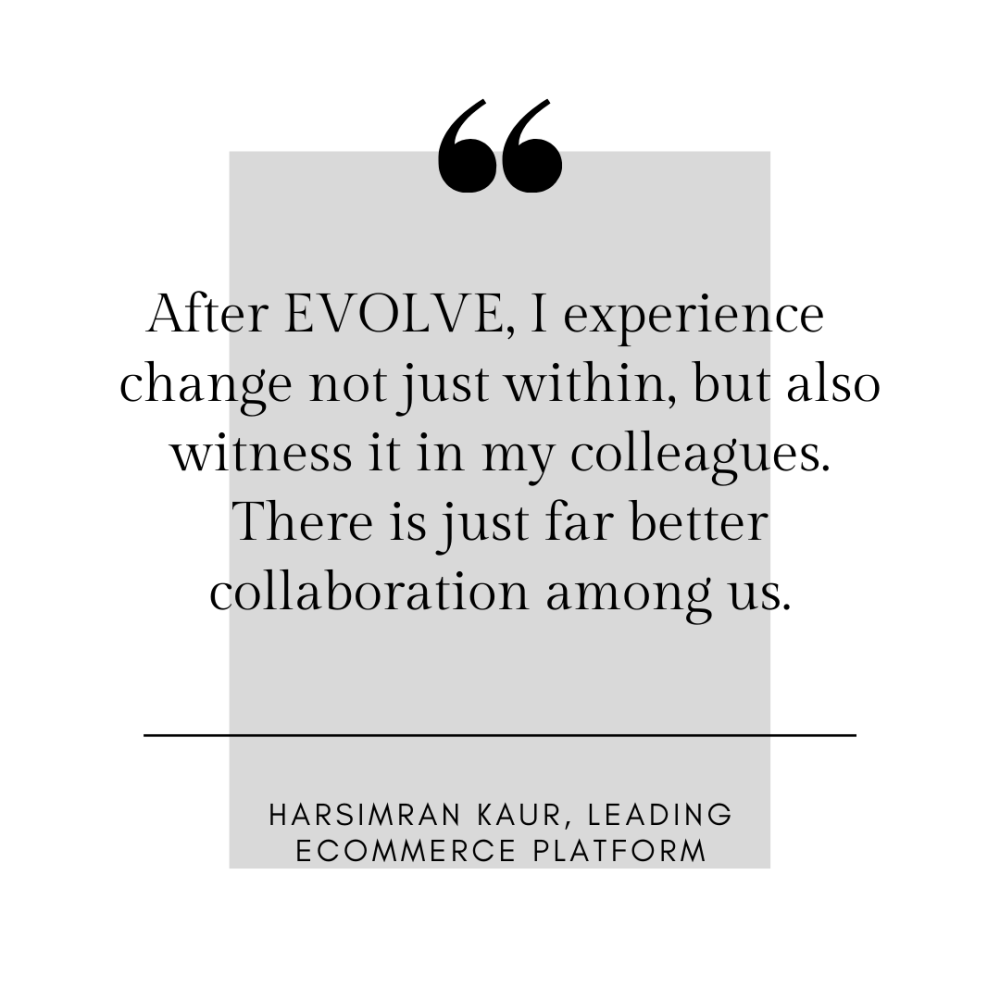
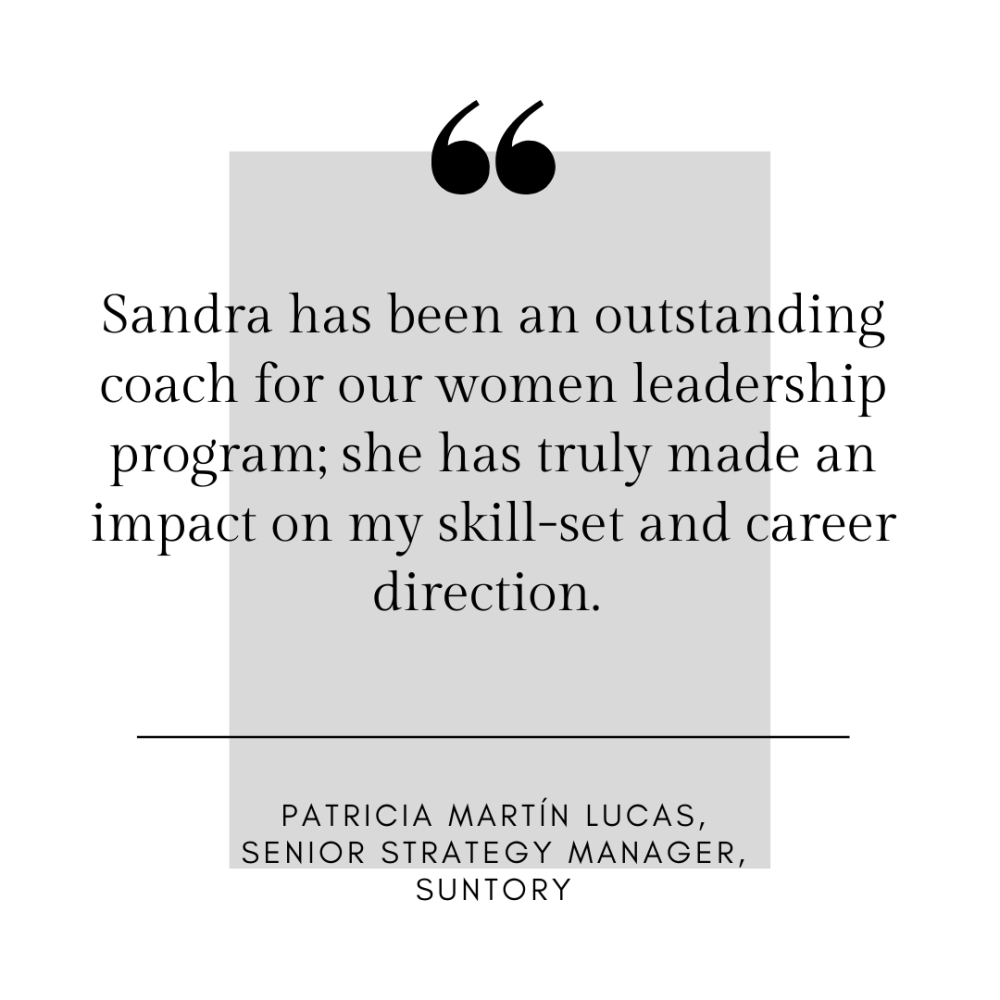
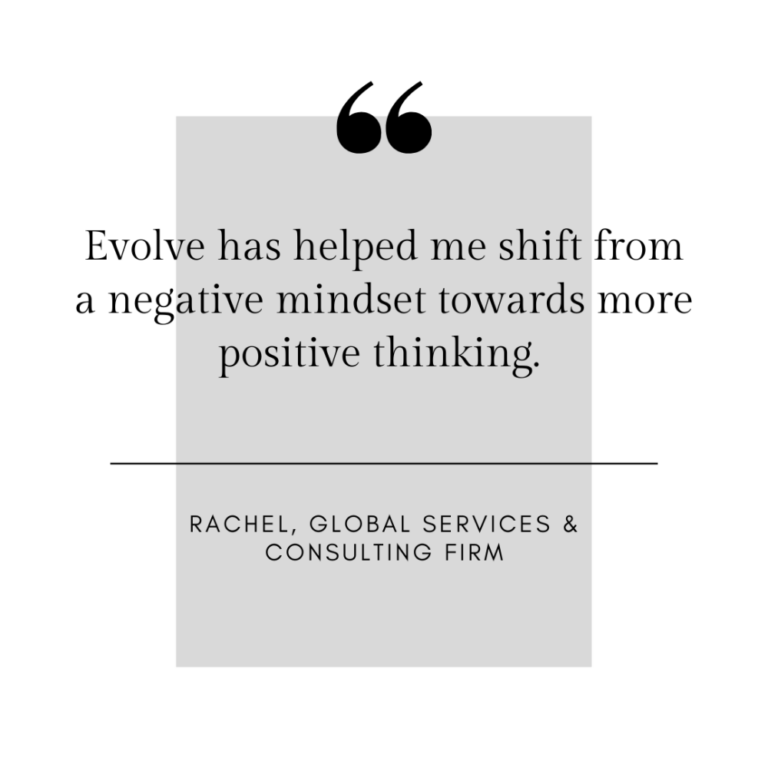
Here is what some of the women professionals who have been on this journey with us have shared about their experience.
What are your goals when it comes to nurturing a gender-diverse team?
What are the challenges in the path of women professionals in your organization?
If you would like to learn more about creating a meaningful learning journey for your team of women professionals or if you simply want to chat about your experiences and challenges, write to us at connect@transformelearning.com.
Stay inspired, visit us on our website, join us on Facebook and LinkedIn.
Listening is one of the most difficult skills on the planet,” says Nicole Lipkin, author of What Keeps Leaders Up At Night.
It’s very hard to stop your mind from wandering . You can always tell when someone’s not giving you their complete attention. Most of us in the workplace are so overwhelmed with things to do—instant messaging, phones ringing.
Listening can feel at times like a lost art, maybe because we are communicating so much more electronically. Being a good listener can help you in every aspect of your life – with family and friends, and with your colleagues at work.
Here are a few exercises that leaders should use to test their ability to suspend judgement and really hear what the other person is saying.
- Stop interrupting -This will be hard to do, but try not to finish the other person’s sentence. You often do this because you think you know what the other person is thinking, but this isn’t always true. In fact, it’s often not true. Our brains are wired to share what we want to hear and we will look for information that supports what we want to see and hear and ignore everything else.
- Listen for feelings – People do not always express their feelings or concerns directly, especially to their bosses. Pay attention to words that express feelings or needs and to nonverbal behaviors that may reflect how someone feels.
- Use Body Language – Body language is an important tool to ensure you do this. The correct body language makes you a better active listener and therefore more ‘open’ and receptive to what the speaker is saying. At the same time, it indicates that you are listening to them.
Learning body language can feel odd, and it’s likely you’ll be doing some of these already without being aware of them. However, the more conscious you are of these four factors the easier active listening will be for you.
– Make sure you face the speaker
– Move closer to the speaker
– Incline your head towards the speaker
– Hold eye contact for longer - Acknowledge what the person said. This is where you tell the person what you think after acknowledging the person’s contribution. Lipkin advises not to criticize what they say, but be genuinely honest about your opinions. This is how you build a relationship.
- Repeat what you heard back to the person. You should always paraphrase what you think the person said. Paraphrasing helps you check for accuracy and understanding.
You should also take note of the person’s tone of voice, because often people will say one thing that seems angry, but they’re actually not. Sometimes this is a cultural thing.
Active listening is an important social skill that has value in many social settings. Practise it often, and it will become your second nature.
Our current culture is constantly giving a thumbs up to having a busy work life and a very active social presence both offline and online. It seems like being extremely busy has become aspirational, something that’s applauded rather than looked at with scepticism.There is a lot about this mindset that’s harmful and could well be the reason for increased cases of mental illness.
When we are so overcommitted the last thing we get to be is – alone. By alone, Imean–without checking our emails, without instant messaging or sharing anything on social media. With all the focus on prioritizing busyness and achievement, the similarly important benefits of spending time alone get thrown to the wayside.
Let me tell you why I highly recommend people to spend some time alone. Apart from the conventional benefits of unwinding, getting creative, improving productivity, it also gives us a chance to carve our own destiny–when spent CONSIOUSLY.
Try doing the following things when you are really alone the next time and do it consciously:
Watch your thoughts:
Though we all may nod in agreement to the fact that our thoughts decide the kind of life we live, yet, most of the time we are unconscious about the thoughts that keep our mind busy. What they are trying to convey? Where they are stemming from? Are they running in loop? Are they brimming with ideas or limiting us with self-doubts? The more we observe the more we could identify the pattern and the root cause of the thought process. We can then choose the thoughts that we want to nurture and weed out the ones that’s taking us down. We truly would feel empowered, when it dawns upon us that we have power over our thoughts and not the other way around.
Observe your habits:
The behaviour that’s on autopilot, is what makes us, and termed as habit. How aware are we about our habits? Every time we act in the same way, a specific neural pattern is stimulated and becomes strengthened in our brain. That specific behavioural pattern becomes our Habit. Now, if we are even the slightest bit aware of this, would we choose the negative habits that does more harm to us than good? Won’t we want to re-wire our pattern and overcome our self-limiting habits? The first step towards it would be, being aware of the negative habits and replace it with a newer desirable routine, until that becomes our second nature.
Identify what makes your happy:
I honestly feel, that every action of a human being is in the pursuit of happiness. Every thing that we do, we need, we aspire for, is to make ourselves happy. Yet the approach is very much outside in. We often give credit to external factors for the happiness in our lives. And hence disappointment is bound to creep in, when things don’t go the way we want them to. The sooner we realise that our happiness is our own business, the sooner we would want to know what really makes us happy. Otherwise what a vast majority of us are doing right now is, trying to live by someone else’s definition of happiness and feeling exactly the opposite, leading to unwarranted depression. So, its impertinent to know what truly make us happy, even when we are all alone.
Once we take charge of our thoughts and habits and identify what truly makes us happy, a huge transformation happens within us, where we are no longer a victim of the circumstance, but a valiant sailor in the rough sea. When this paradigm shift happens, we start carving our own destiny, we become a better version of ourselves and no longer ask “Why me” but in any situation, take the bull by its horns to say “Try Me”.
“The art of communication is the language of Leadership” and what makes the communication inspiring & powerful is – Words, Stories and Metaphors.A great leader is the one who know that when he uses a certain word, a metaphor or a story, an average mind will associate it with a certain reference and a specific memory will be evoked. He uses this to his advantage to connect with his audience and motivate them to take desired action.
Words:
They make us laugh, they make us cry, they can wound us, or heal us. They offer us hope or devastation. With words we can make our noblest intentions felt and our deepest desires known.
What a gift these words are, we transform the unique shapes we call letters into a unique and rich tapestry of human experience. They provide us with a vehicle for expressing and sharing our experience with others and self.
The power of words is such, from a mother’s lullaby to a politician’s speech, love letters from a beloved, or a call for rebel, or any emotions for that matter like – anger, sadness, happiness, surprise, belonging, until It is expressed in a word, it will not have any meaning for us.
The words that we attach to our experience become our experience. So, if we want to change our lives and shape our destiny, we need to consciously select the words we’re going to and expand our choice of vocabulary. Because words form the thread on which we string our experiences.
Metaphors:
Some words when strungtogether carry more meaning and emotional intensity. Metaphors. What is a metaphor? Whenever we explain or communicate a concept by likening it to something else, we are using a metaphor. The two things may bear little actual resemblance to each other, but our familiarity to one allows us to gain an understanding of the other. Metaphors can create emotional intensity more quickly and completely than traditional words we use.
Metaphors can transform us; Metaphors can inspire us. Most of us, are identified with metaphors about various aspects like – Life (Life is like a book, life is a struggle), love (Love is a battlefield, Love is forever), Marriage, work, emotions etc etc. We subconsciously try to align our actions to fit into the metaphors we are identified with.
Metaphors have been used historically used to inspire people and call for action. Metaphors, that way is powerfulin determining and conditioning our belief system. A host of memories appear when you hear a metaphor. Some examples of famous metaphors – “We rise lifting others”, “one giant leap for mankind”, “Chaos is my friend”, “All world’s a stage”.
Stories:
Stories are as old as our civilisations. They’ve been travelling through centuries and historically influence men and women that have and will walk this world. They are the conveyer belt of language and culture, tradition and inheritance, cultural wealth accumulated over generations.
Stories have always played a crucial role in shaping the very way we think, the way we function. There are stories that warn us, that scare us, that preaches, that propagates and there are stories that make us forget out worries, stories that make us experience joy.
Every experiential story has the power to be a solution to some or other problem in the world. Stories has the power to change someone’s life without you meeting that person.
We have come a long way from living on instinct and that been possible because of our accumulated experience and knowledge being passed on from generations to generations in the form of words, metaphors and stories. If we didn’t have these, our advantage over the other species will slowly and gradually diminish over the time. Without the power of words, metaphors & stories, we would be right where we started. Love them and befriend them. Listen to them carefully and use them wisely.

TransforMe Learning is a globally focused leadership training and coaching company in Sydney. We provide leadership training, executive coaching, and team transformation to better prepare individuals and organisations for the future of work.
TransforMe Learning acknowledges the Traditional Owners of Country throughout Australia. We pay our respects to Elders past and present.