

Founder To CEO – A VC’s Perspective On Leading Start-Ups #startup leadership
In the 12th edition of the Leaders’ Cafe, we had Manu Rikhye, Partner, Merak Ventures as our guest speaker in conversation with Gatik Chaujer, Co-Founder, TransforMe Learning to discuss his insights on essential leadership skills for growing a successful start-up.
Summary
Startups have limited resources in the form of capital, talent, tools, and other resources.
- Founders of startups have an ownership mindset that drives them to push harder than anyone else.
- Perseverance is required to succeed in the chaotic startup environment, where every decision can make or break the company.
- Successful founders in a resource-constrained environment are focused on the outcome that each dollar spent will create for the business.
- Incentives should be aligned with outcomes to drive entrepreneurial spirit and high performance.
- Misconceptions about entrepreneurship swing between extremes of thinking fundraising is easy or too difficult, influenced by external factors.
- Developing conviction in your idea, taking the plunge, and learning from successful and not-so-successful founders can help you succeed as an entrepreneur.
- As a mentor, it’s important to remind founders to stay focused on solving the initial problem before getting distracted by other opportunities.
- During times of scarce funding, it’s important to shut out the noise and focus on the fundamentals of your business.
- Successful startups achieve success by focusing on their business fundamentals and taking one step at a time, even in the face of uncertainty.
Transcript
Gatik Chaujer –
What do you think are the principal differences in leadership behaviours, in a startup versus a more established organization?
Manu Rikhye –
The main difference between large organizations and startups is first, access to resources. Startups have limited resources in the form of capital, talent, tools, and other resources. This affects how leaders work with others and their personal contributions. Another difference is the ownership mindset of founders, which drives them to push harder than anyone else, making it hard to find people to match their level of commitment. The third difference is the perseverance required to succeed in a chaotic startup environment, where every decision can make or break the company.
Difference between large organizations and startups:
- Limited access to resources for startups (capital, talent, tools, etc.)
- Ownership mindset of founders
- Perseverance
Gatik Chaujer –
What recommendations do you have for startup leaders to manage scarce resources, exhibit ownership and perseverance? Also, how can leaders inspire their team to have a founder’s mentality and exhibit behaviors that lead to success in a startup ecosystem?
Manu Rikhye –
Successful founders in a resource-constrained environment are focused on the outcome that each dollar spent will create for the business. They avoid making decisions based on organizational pressure and become cautious but not overly so. Incentives should be aligned with outcomes to drive entrepreneurial spirit and high performance, which can be achieved through a simple structure that links compensation and career growth with successful delivery of tasks. This approach may not match the level of contribution of a founder but can help people step up and perform at a high level.
Gatik Chaujer –
What are the common misconceptions among startup founders about building a successful business?
Manu Rikhye –
Misconceptions about entrepreneurship are influenced by external factors, and can swing between extremes of thinking that raising money is easy or that it’s too difficult to even try. It’s important to develop conviction in your idea and take the plunge, regardless of external circumstances. Everyone’s entrepreneurial journey is different, and it’s helpful to talk to successful and not-so-successful founders to learn from their experiences.
- Misconceptions about entrepreneurship swing between extremes of thinking fundraising is easy or too difficult, influenced by external factors.
- Develop conviction in your idea, take the plunge, and learn from successful and not-so-successful founders.
Gatik Chaujer –
As a mentor to many startup founders, can you share an experience of how you helped a Founder succeed and what they needed most help with? This can give an insight to viewers who may be considering this journey and how to find a mentor.
Manu Rikhye –
I have to confess that in the last four years, my work as a mentor has been more about reverse mentoring and learning than me being able to give advice to others. I have been privileged to work alongside some of the best and most talented founders in India, which is something I am very excited about.
One common theme that comes up among early stage founders is that they start with one big problem and solution in mind, but as they begin to build their solution, they encounter multiple opportunities and get distracted. As a mentor, I remind them that resources are finite, and they must stay focused on making progress and showcasing that their solution can solve the initial problem before branching out to other opportunities. This becomes even more critical as finite resources can make or break a company.
As humans, we are often affected by what we hear, and founders are no exception. During times when funding seems scarce, I have to talk founders off the edge and remind them that if they build a valuable business, they will find the capital they need. I advise them to shut out the noise and focus on the fundamentals of their business, taking one step at a time.
One of our portfolio companies, Advantage Club, had an outstanding founding team, and when we started partnering with them four years ago, it was hard for people to understand their business, which was an employee retention and recognition platform. However, they kept making progress, and today they are successful because they focused on the fundamentals of their business and kept walking one step at a time.
Initially, people were unsure about the value proposition of Advantage Club – an employee retention and recognition platform. When we invested in them, the hope was that they would reach a revenue of $1 million and the world would start to take notice. They surpassed expectations and achieved $2 million, then $3-5 million, and now they’re close to reaching a revenue of $10 million ARR, serving 60 countries globally with a SaaS offering. Despite the noise about unicorns and funding, very few companies in India have been able to reach this threshold. The frustration and disappointment felt by the founder were understandable, but I advised them to keep walking one step at a time and eventually, someone would have to notice their enviable offering and talented team.
As a mentor to early stage founders, I remind them to stay focused on solving the initial problem before getting distracted by other opportunities. I advise them to shut out the noise during times of scarce funding and focus on the fundamentals of their business. Our portfolio company, Advantage Club, achieved success by focusing on their business fundamentals and taking one step at a time. Despite facing uncertainty, I encouraged the founder to keep walking one step at a time and eventually, their hard work paid off.
Gatik Chaujer –
What should HR and L&D leaders be looking at differently in the startup ecosystem? Should they approach talent development differently? Can you provide any insights or examples?
Manu Rikhye –
To succeed in today’s rapidly changing world, individuals must embrace the fact that expectations, deliverables, and talent availability are all evolving faster than ever before. This means taking the time to learn about what’s happening in the world and upskilling oneself to bring more value to their roles. Finding a personal approach to accessing information and knowledge can be helpful, such as investing in early-stage companies or exploring new tools.
Another important factor in staying ahead of the curve is being open to adopting new technologies. Companies are often slow to embrace new ideas, waiting for others to prove their effectiveness. However, this can result in missed opportunities as the technology may become less relevant by the time it’s adopted. By having the courage to adopt new technologies, individuals can unleash value and find solutions to pain points that older products may not address.
Lastly, developing skills and leadership are crucial in navigating this fast-paced environment. By constantly learning and growing, individuals can stay ahead of the curve and lead their teams to success.
- To succeed in today’s world, individuals must upskill and stay informed about evolving expectations, deliverables, and talent availability.
- Being open to adopting new technologies can help unleash value and solve pain points that older products may not address.
- Developing skills and leadership are crucial in navigating the fast-paced environment and leading teams to success.
Gatik Chaujer –
What are the top three skills that L&D leaders should focus on to develop leaders in a startup at various levels, according to you?
Manu Rikhye –
That’s a great question. In the startup world, the skills you need to think about are different than in the corporate world. One skill that I think startup organizations need strongly is the ability to navigate difficult decisions and manage conflict within and outside the organization. Additionally, softer aspects of leadership, like building a strong organizational culture and having a clear set of people and leadership practices, should also be prioritized. Startups should focus on creating a living document of their culture and leadership practices, which can be given to people as a toolkit to make assimilation easier. Overall, these are the top two skills that I think startup leadership, HR, and L&D should think about.
- Starting a company can disrupt financial security from a regular paycheck.
- As a founder, you have complete ownership and responsibility for decision-making and outcomes.
- Access to resources and talent can be a struggle, and founders may have to do tasks outside their skillset.
So, here’s an audience question from Jay Krishnan AG – should we plan starting taking revenue from the MVP? or should it be only to take feedback to improve
Manu Rikhye –
The key is supreme focus on getting an MVP out and starting monetization early. This is the ultimate test and only when you have a minimum viable product in the market can you start the feedback loop. Seeding the idea that it has to be a paid product from the start is important, even if you initially offer discounts for early feedback. It’s essential to get real people paying real money for it as it’s a false sense of success if not.
Gatik Chaujer –
My question to you is, when do you think or how soon should a startup organization start looking at investing in leadership development? How soon should employee development, leadership development be looked at from a startup lens?
Manu Rikhye –
As a founder, investing in developing and coaching your team should be a priority from day one. It may seem time-consuming in the short term, but not doing so will prevent you from delegating and focusing on more strategic tasks. Once you have enough resources, it’s important to hire full-time or part-time partners to address coaching needs and invest in finding the right leadership and HR. Many founders invest heavily in these areas early on, even if they have received funding in the millions. They may hire partners to help with culture and verbalize their expectations.
- Developing and coaching the team should be a priority from day one for a founder.
- Hiring full-time or part-time partners can help address coaching needs and finding the right leadership and HR.
- Many founders invest heavily in these areas early on, even if they have received funding in the millions.
Gatik Chaujer –
Picking up the last question from the live show – he talks about how he’s seen you in the past, and obviously, he’s wanting to get your broad insights on leadership, courage, that’s really his anchor when he sees you. So anything you’d like to share.
Manu Rikhye –
As a founder, I believe that leadership courage and grit are essential qualities to possess. In large corporations, success can sometimes be disconnected from these qualities, but as a founder, you have no choice but to demonstrate them. It’s like fighting on the front lines, and ducking isn’t an option. You have to find that extra sense, that extra gear, and muster the courage to make hard decisions. Failure to do so could mean the end of your business, and everything that relies on it. So, it’s a do or die skill that is critical for success.
In the 11th edition of The Leaders’ Cafe – LinkedIn Women as Leader’s Playbook, we had Aishwarya Rao, Lead, Gender Equity Network, Accenture, Australia as our guest speaker. She discussed her personal journey as a woman leader and shared learnings on what organizations can do to build an inclusive culture. She mentioned setting up flat organizations, creating self-driving teams, and empowering a collective culture where people can thrive and bring their best selves to work. She also talked about the importance of having a strong support system when feeling isolated and alone, and how to overcome such moments by shifting the conversation and looking at things differently. She shared her experience of using the Balance app for systematic meditation. Aishwarya also discussed external challenges that women leaders face in the workplace today, including stereotyping and workplace structures that hinder people’s ability to thrive and belong. She emphasized the importance of calling out inequitable practices in the workplace and giving others opportunities to be recognized as leaders. She shared that leaders have a moral obligation to create an inclusive workplace that recognizes and supports diversity.
Summary
Sandra Colhando –
When you reflect back on your leadership journey, what are some of the things you’re most proud of in your climb up.
Aishwarya Rao – The reflections that I want to share here today, across my 15 year journey, is the setting up of flat organisations, teams that are self driving teams and empowering that collective culture where people can thrive and bring their best selves to work. And something a leader must leave behind in terms of legacy must be of significance, it should not be necessarily of individual success. And that’s what I believe in.
I’m really proud of having created teams that are flexible, transparent, full of people that are so passionate, wanting to make that visible difference.
Sandra Colhando –
Has there been a particular moment, as you’re working with your team, where you felt alone, or you felt isolated in your struggle? And you felt that I don’t know who to look up to? And how did you overcome that if you did go through that.
Aishwarya Rao –
Probably five or six years ago, when I was looking up to leadership, there weren’t a lot of people like me, in the business and or in the industries that I was operating within. And that what you cannot see you cannot be so there have been moments where I have thought, oh, it would be wonderful to see someone like myself up in the organisation and to aspire to be like them.
I have a strong support system including career counselors, mentors, and coaches who I can rely on during moments of self-doubt. While I am proud of my accomplishments, I didn’t get here alone. As you climb the ladder, it’s easy to feel isolated, but having a support network is crucial. Mentors and coaches have championed me on my journey and I am grateful for their guidance.
Sandra Colhando –
The beauty of complexity lies in the simplicity. And when you feel lost, asking help, could seem so simple, but that’s probably sometimes the biggest challenge that you put yourself through. What do you do when in those moments, you don’t have the support system? What are you telling yourself in those moments? So is there something that you do yourself to get out of that temporary blip?
Aishwarya Rao –
Oh, well, I’m going to give you two responses. One is, I use this app called Balance. I have been using it for a few years now. And it has been fantastic. So there has been no 3am moment because I go to sleep after meditating. And I wake up and do my meditation. So it’s been a wonderful app. I think we’ll all benefit with that kind of systematic meditation. I think you’ll have to actively work on getting yourself out of your head, like, you’ve got to shift the conversation, you’ve got to look at it differently. That’s the only way to do it. And often, I feel like we get ourselves into situations, which we need not. I would say tap on to your friends’ cohorts, your peers, because they’re also probably going through similar challenges. And I think you may not have the courage to go up to your manager or to your boss, to your people leader and say, Hey, this is what I’m facing. But I feel like you might be able to have that conversation with your peers, with your colleagues.
I’m going to give you two responses – I use this app called Balance and second is I think you’ll have to actively work on getting yourself out of your head, like, you’ve got to shift the conversation, you’ve got to look at it differently.
Sandra Colhando –
Yeah. And I resonate with what you said in terms of even if you’re not comfortable going to your leaders and having this conversation, but you know, your colleagues and people around at work. Because in the women leadership programme that we run, we’ve heard so many women professionals talk about the biggest takeaway from programmes like this is, of course, the skills and behaviours, etc. Keeping that aside, is the power of many that I am not alone in this journey, that I’m feeling like an imposter like everyone else is, I’m going through the same pains that everyone else’s, and I feel so much better, knowing all of us are. And so it’s such a relief. And I think half your burden is gone there that I’m not doing it alone, that you know, a lot of other people around me were experiencing that. So it’s a good, safe space to have that kind of conversation.
I want to shift gears towards external challenges. What are some of the biggest external challenges that women leaders face at the workplace today? And how do you think one can overcome that
Aishwarya Rao –
Stereotyping is common and workplace structures can hinder people’s ability to thrive and belong. Organizations and leaders have a responsibility to create equitable and inclusive cultures. It’s important to call out inequitable practices in the workplace and give others opportunities to be recognized as leaders. Delegation should be done by trusting others’ abilities rather than just assigning boring tasks. Leaders have a moral obligation to not contribute to external challenges people face in the workplace. It’s important to recognize and create an inclusive workplace for people who identify as non-binary.
In the workplace, I do think we’ve got those obligations as leaders in order to make sure that there is no external challenge in the future – that’s the place we are creating.
Sandra Colhando –
Absolutely, and we are looking at value sharing that we’re looking at, you know, an environmental organisation that’s truly inclusive, irrespective of your background, gender, race, etc. What are the things organizations may be missing out on if they don’t have enough women in the leadership table?
Aishwarya Rao –
In terms of addressing that question, and I want to be very careful about not stereotyping genders over here. Creating a nurturing workspace where differences are respected is crucial for a successful team and some people are naturally good at creating that space. This quality is not limited to being a parent and can be brought by anyone. I do think that some people are really well positioned to bring that aspect to create flexible workplaces, because you’re possibly multitasking and you understand the value of flexibility. Creating workplaces not limited by hierarchy, but rather allow for growth and opportunities to thrive. Intuition and the ability to network are advantages that can benefit everyone and are some traits which naturally come to some people. Women, in particular, can do a better job of supporting each other in the workplace. By building nurturing, flexible, and intuitive workplaces, we can challenge traditional patriarchal structures.
Some of the advantages are:
- Creating Nurturing Workplace
- Creating Flexible Workspace
- Intuitive and ability to network
Sandra Colhando –
Yeah, and the brilliant insights on behaviours as well. I know there’s a lot of work happening in women leadership, and you’re doing work with women professionals. How can we champion this cause in organisations? What can we do specifically? What are some of the behaviours or some steps that we can take to build an equitable workplace
Aishwarya Rao –
It’s important to be conscious of gender biases in the workplace, such as assuming women will handle “invisible” tasks like organizing events.Use inclusive language and symbols in presentations to avoid promoting alpha male stereotypes. It’s crucial to distribute workloads fairly and not make assumptions based on gender, parenthood, or caregiving responsibilities. Organizations should have policies in place to support these responsibilities, and leader should communicate these policies to their teams to build trust and create a supportive culture. By being authentic and mindful of these issues, you can help create a workplace where everyone feels valued and can bring their best selves to work.
It’s important to be conscious of gender biases in the workplace, such as assuming women will handle “invisible” tasks. Use inclusive language and symbols in presentations. Distribute workloads fairly and not make assumptions based on gender, parenthood, or caregiving responsibilities. Organizations should have policies in place to support these responsibilities, and leader should communicate these policies to their teams to build trust and create a supportive culture.
Sandra Colhando –
Who’s your role model that you look up to?
My mum is a financial expert and my biggest role model. She taught me that just because you can do something, it doesn’t mean you have to. Another role model of mine is Julia Gillard, the former Australian Prime Minister. I once saw her at an airport and she said, “even the Prime Minister has to go on a break sometimes”. It was great to see her living by that message. I believe we all need to learn to take breaks and pause sometimes.
Sandra Colhando –
Beautiful. And is there any book or TV show that you feel that it’s a must read and great for women professionals?
Aishwarya Rao –
There’s actually a podcast that I started on this during the pandemic There’s one called Women at Work. It’s the Harvard Business series one. And it’s really byte sized, like 25-30 minutes and it talks about anything from delegation, playing office politics. Those are the two things that come to my mind. But it’s a fantastic podcast to listen to.
Sandra Colhando –
How do you choose your mentors and coaches?
Aishwarya Rao –
I think rely on your intuition, seek out honest and transparent coaches and mentors who can identify your gaps.They don’t have to be from your field, but should be people you can easily connect with. Seek out mentors from LinkedIn or social collectives, such as friends, siblings or acquaintances. Choose mentors based on how easily you can communicate with them.That’s how you should be choosing your mentors.
Rely on your intuition, seek out honest and transparent coaches and mentors who can identify your gaps.
Sandra Colhando –
How important is sharing knowledge among leaders across companies to bring the best practices and use for making change at society level, particularly from a DEI perspective?
Aishwarya Rao –
It’s important to dismantle patriarchy and create inclusive organizations where everyone can bring their best selves to work. Some organizations are ahead of the curve, while others are just starting out. Sharing knowledge and best practices is crucial, and there are multiple organizations like TransforMe that bring together those working in DEI. It’s not just the responsibility of DEI leaders within an organization; individuals can also exchange feedback and notes on creating a good culture at work.
Organizations should share their practices, and there are many BI forums that facilitate this. It’s like sharing a party game idea and playing it at another party – exchanging best practices benefits everyone.
Sandra Colhando –
Here is a question from the audience, there was a survey done last year, which examined that men were found 48% fatigued by the notion of gender equality, and 52% feel they are being discriminated against, with women being favoured for promotions and jobs on the basis of their gender. How do you address this attitude of male colleagues at work?
Aishwarya Rao –
It is true that when we are having conversations constantly about gender equality in the workplace, it might sound as if we are discriminating against one gender. But I suppose the question comes down to establishing the intent of having these conversations. Why are we trying to create this because honestly, we have a banner up in one of our offices where it says none of us are equal until all of us are equal. As leaders, we have the responsibility to communicate this intent and be transparent about evaluation criteria and promotion goals. If gender equality is a part of the organizational and leadership behavior, it will not be looked upon as discriminatory. Communication with the right language is also important. If discrimination is perceived in the workplace, we must identify why and how to address it.
Sandra Colhando –
What do you think is the most important piece of advice for women who want to pursue a career as a leader?
Aiswarya Rao –
My piece of advice is start off and acknowledge that you want to be a leader in your organisation. And it’s completely okay to want that. And to work towards that. I think I think you’ve got to own it, you’ve got to own your story, you’ve got to this is coming from someone who has had so many self doubts. So that would be the advice I’d give myself and to you to say absolutely own that.
In 10th edition of The Leaders’ Cafe – LinkedIn Live Start-Up To Scale-Up, we had the newest shark from the popular television series Shark Tank India – Amit Jain, Founder and CEO, CarDekho Group as our guest speaker in conversation with Sandra Colhando, Co-Founder, TransforMe Learning & Leadership Solutions to discuss the lessons for building the next generation of leaders
Summary
Some of the key ideas discussed during the LinkedIn Live included:
- Creating a culture of eagles: To create a culture of eagles, Amit Jain emphasised the importance of focusing on team achievement instead of individual achievement. He also stressed the importance of treating employees like founders, empowering them to make decisions, and identifying individuals who share the company’s cultural values. He also mentioned that commercial constructs, such as equity for founders, are important for creating an eagle-like structure.
- Coaching and scaling up: Sandra asked Amit about the challenge of bridging the gap between speed execution and coaching when scaling up quickly. Amit explained that as the company grows, more empowered voices are needed to contribute to decision-making. Founders need to learn to listen to others and let go of control as the company scales. Coaching can be helpful in developing skills to manage a larger company. To empower the team, the founder needs to educate them on core principles of decision-making and provide context to ensure everyone is well-equipped. Ownership of decision-making is crucial, and leaders need to guide their team to make the right decisions while letting them take ownership.
- Managing generational diversity: Sandra asked Amit about how to manage generational diversity in a company and how to skill leaders to be great people leaders in this environment. Amit explained that having age diversity in a company is important, but it’s crucial that the culture treats all employees as peers, regardless of their age. He emphasized the importance of exposing young employees to leadership opportunities early on and listening to them. Amit also mentioned that treating employees well is important, as they will in turn treat customers well. Finally, Amit stressed the importance of coaching or letting go of toxic leaders, as cultural ethos are more important than individuals in an organization.
- Leadership development program: Amit Jain shared details about Cardekho Group’s leadership development program, which runs throughout the year and identifies the next generation of leaders. The program includes manager coaching in a one-on-one and one-on-many format, and seasoned coaches teach managers how to succeed with their people, how to get all their team members to perform, and how to get teams to work collaboratively. The program also includes feedback loops to ensure continuous improvement.
One is that, a mindset shift.I think what we need to focus on is that as long as Human Connect is there, productivity can be much better, even without those people coming to office. 70% is what a person picks up on the job. How are you curating those roles? How are you creating those curating those processes? From a larger HR perspective, I think that’s also something which all of us are focusing on. The other piece is that – the digital mindset. The digital tools available right now are actually helping us to reach out to the customer in the most effective fashion.
Full Transcript
Sandra Colhando –
Legends like Steve Jobs and Bill Gates who have an eagle like vision, with the ability to both see the reality as is, as well as make accurate predictions about the future. Their vision is big and focused to produce big results. So how do you find and create those eagles in an organisation?
Amit Jain –
To create a culture of eagles, one must first focus on themselves and find happiness in seeing others bloom. This requires a shift from a mindset of individual achievement to a mindset of team achievement. Good leaders must also be good human beings who empower and mentor their teams. At Girnar, the company culture is based on treating employees like founders and empowering them to make decisions. Eagles must have a vision for the future and the ability to execute in the present. Commercial constructs, such as equity for founders, are also important for creating an eagle-like structure. Company culture is crucial, and founders must identify individuals who share their cultural values. I also believe hiring laterally may not always work as well in finding and nurturing eagles within the company.
To create a culture of eagles, one must first focus on themselves and find happiness in seeing others bloom. Good leaders must also be good human beings who empower and mentor their teams.
Sandra Colhando –
One quality that can be challenging for Eagles is being great coaches. Leaders like Steve Jobs and Elon Musk, while they are brilliant, may not have had the patience and time for coaching, which is a slow process. This can be difficult when scaling up quickly. Bridging the gap between speed execution and coaching requires developing the necessary skill set and having patience. Coaching involves listening, stepping back, and allowing space for growth, which may not align with the fast-paced nature of scaling up. How to bridge that gap?
Amit Jain –
As a founder of a company in its early stages, it’s important to have control over decision-making and choose the right people to drive the company forward. Too much democracy can hinder agility and prevent product-market fit. As the business grows, the team expands and more empowered voices are needed to contribute to decision-making. Founders need to learn to listen to others and let go of control as the company scales. Coaching can be helpful in developing skills to manage a larger company. To empower the team, the founder needs to educate them on core principles of decision-making and provide context to ensure everyone is well-equipped. Ownership of decision-making is crucial, and leaders need to guide their team to make the right decisions while letting them take ownership. Asking the right questions can lead to better decision-making than simply providing solutions. This approach helps to create more accountable and responsible teams. As the company evolves, the founder’s leadership style needs to change accordingly
As a founder of a company in its early stages, it’s important to have control over decision-making and choose the right people to drive the company forward. Too much democracy can hinder agility and prevent product-market fit. As the business grows, the team expands and more empowered voices are needed to contribute to decision-making.
Sandra Colhando –
Now you have an organisation of extremely diverse leaders, and not just background, there’s also age and experience, how do you manage this generational diversity? And how do you skill them to be great people leaders in this environment? Is there a systematic approach?
Amit Jain –
But I think there are two aspects. One is coaching that I’ll discuss later. Having age diversity in a company is important, but it’s crucial that the culture treats all employees as peers, regardless of their age. Exposing young employees to leadership opportunities early on is also essential. For instance, at Girnar, the CEO would invite 30-40 next-generation leaders to board meetings, and each of them would present something. This created a peer learning environment and empowered young employees. As a leader, it’s important to listen to young employees and learn from them. The phenomenon of shifting eras happens frequently, especially in terms of technology, and a leader needs to keep up with it by learning from the younger generation. Treating employees well is important, as they will in turn treat customers well. Having toxic leaders can be detrimental to the company’s long-term strategy and culture, and it’s crucial to coach them or let them go. Ultimately, cultural ethos are more important than individuals in an organisation.
ON GENERATIONAL DIVERSITY
I think there are two aspects to this. One is coaching. Having age diversity in a company is important, but it’s crucial that the culture treats all employees as peers, regardless of their age. Exposing young employees to leadership opportunities early on is also essential.
Sandra Colhando –
My question is when you get rock stars and they give you the numbers you want, but they’re toxic, they’re not developing the people. You said, either coach them or you know, let them go as well. And it’s critical.
Amit Jain –
At Cardekho Group, we implement structural interventions to build leaders through our leadership development program, which runs throughout the year. This program identifies the next generation of leaders and includes manager coaching in a one-on-one and one-on-many format. Our seasoned coaches teach managers how to succeed with their people, how to get all their team members to their level, and how to move to the next layer. Our coaching also focuses on important skills such as how to provide feedback effectively, which is often lacking in India. Many organizations struggle with managers who are excellent performers but are not equipped to manage teams. Our structured intervention aims to address this issue and ensure that our managers are effective leaders.
Sandra Colhando –
As leaders, burnout and lack of inspiration can affect anyone, not just founders, CEOs or senior leaders. I have personally gone through phases of feeling uninspired and burnt out, and I know it can be tough to come out of it alone. Do you have any tips or insights to share for those struggling with this right now?
Amit Jain –
Well, I have been through many failure phases in my entrepreneurial journey, but I have never really felt burnt out. The reason is that I have always been surrounded by very loving people with great intentions and no biases towards me. My brother Anurag is my co-founder and whenever I feel down, we spend an hour every night chatting about things. He is the one who lifts my spirits up by reminding me to have gratitude towards life and to focus on the inputs rather than the outcomes.
When I really feel down, I make sure to meet my family and close friends more often. As a founder, I believe it’s important to have somebody who you can confide in and talk to about your challenges and emotional journey. I always try to have a mentor who has run a much larger company than me to give me objective advice and talk about how they handled similar situations.
Lastly, I believe it’s important to enjoy your work every day. If you’re not enjoying what you’re doing, you’re not really living. If you keep dragging yourself into it every day, you will eventually burn out. I realize that sometimes it’s better to pivot to something new rather than trying to pursue something that may not be working. Perseverance goes a long way, and you can keep changing your ideas until you find something that works.
In fact, I have experienced this firsthand when I was running an e-commerce site from 2009-2010. We were selling mobile phones, but too many competitors entered the market, and we were not able to get extra funding. We had a knack for getting free traffic, but the infrastructure of delivery was not very good, and we started making huge losses. So we pivoted and started a pricing aggregation site, which became profitable. We shut down the old venture and started something new.
I remember losing all my money during the 2008-2009 market crash, and we didn’t even have enough money to pay salaries. I distinctly remember sitting with my brother that night with a zero cash balance, figuring out how to pay salaries and not let the team know that we had lost all the money. But Anurag reminded me that we had made it from zero in just two years, and we knew how to get back up again. That unconditional support was what helped me keep going.
Having a supportive co-founder and close friends helped me avoid burnout despite facing failure in my entrepreneurial journey. Enjoying your work every day is important, and pivoting to something new can lead to success. Unconditional support from loved ones is essential in tough times
Sandra Colhando –
So do you feel it’s always great to have Co-Founders?
Amit Jain –
Trust is key for any startup, and the intent of the co-founders must never be questioned. This is especially important in India, where the ecosystem can be divided into left and right. If there is trust in the intent, everything else can be worked out through communication and collaboration. However, if the intent is bad, then everything will fall apart. It’s also important to note that no startup is created without mistakes. Sometimes things can go wrong when a lot of money is involved, and one founder may become more important than the others. This is where the person in charge needs to balance things out and ensure that there is open communication and equal visibility for all.
Sandra Colhando –
It’s pretty tricky to do that. It’s not so easy. You have this unconscious competition, a competitive streak that comes in with two co founders. But I’m glad you’re kind of managing that in doing well.
Rapid fire
Sandra –
I’ve got some Rapid questions for you really quickly, quick answers. So one is choose one between the two, which is, the first one is massive growth that has been history books, or live in people’s hearts,
Amit Jain –
Live in people’s hearts, I believe in living on through others by impacting the next generation. To have a life acknowledged by many for the lessons they learned from me is where I want to live. I will live on through the people I have worked with, coached, and the founders I have mentored. My thoughts will translate into their next vision, bringing me greater joy than anything else.
Sandra Colhando –
If you were to write a book on your journey, what would the title be?
Amit Jain – Street Fighter, is probably how I would title it. I’ve been a Street Fighter all my life . When I went to the ground, I did telecalling for six months in my own company. I’ve sold my first bike to the dealers. So I’m more like a Street Fighter guy who rose to this position, finally. And I think I value that phase of street fighting the most, versus running this one, because I could not have reached here without that phase. So I think I will probably title it Street Fighter – a story of a Street Fighter kind of a thing.
Sandra Colhando –
What is your go to productivity hack?
Amit Jain – I have a few productivity hacks that I find helpful. First, I use the 6 x 6 x 6 technique where I pause before responding to something. Second, when I feel down, I look at pictures of my kids and meditate to change my mindset. Third, I always start meetings by asking personal questions to build empathy within the team. Fourth, I read every consumer review and pass it on to my team to make daily improvements. Lastly, I find five reasons to smile every day to maintain a positive attitude and pass on happiness to others. Acknowledging and recognizing the work of others also motivates them to excel beyond their potential.
Sandra Colhando –
When we talk about the emotionally intelligent leader, one of the skill sets required to be strong leaders is to be able to have that empathy and connect. And the team meeting example that you gave is first check in with people before you check in with the numbers, we often call it the neck down and neck up approach. So first, find your neck down, where are your people in this moment, emotionally, then check with their state, and then you get a lot of answers on your neck-up, which then you get into your numbers.
Amit Jain –
That’s a brilliant example, to start. Let’s say, if I was not good at meetings and I personally believe after every meeting, I have to ask a question to myself, when this meeting is over, will anything go out or you could do better? If the answer is the later, then I’m not a good lead advisor. Right? So I have to answer this question every single meeting to myself. And if the case is later than I have to pull it back again, which means I have to do a personal call and talk about how I was not a better leader today in the meeting. I probably was not a good manager, acknowledging your own mistake is very important at times because you at times are not right and inward in your heart. I make sure that I’m able to acknowledge my own behaviour, which is not right. Because if I don’t acknowledge that, the other guy who’s working with me, my thing is the right way. And that’s not the right way to go.
Sandra Colhando –
If you had a time machine and you want to go back to the younger metal just starting off, and you had to give him one advice to do something differently. What would that be?
Amit Jain –
I wouldn’t give him advice, but rather let him discover and learn from failures. It’s important to experience them firsthand to truly learn. I believe this approach has been fantastic and I’m happy with it.
Sandra Colhando –
What animal or creature resonates with you the most
Amit Jain –
I love the tiger for its agility, fierceness, and speed. It’s something I relate to in my life. I even have a big tiger painting in my office. Our company logo and missions are also based on the tiger, and it remains a symbol of strength and determination for us.
Sandra Colhando –
If a CEO were to ask you for one piece of outlandish advice to build a successful empire, what would it be?
Amit Jain –
Be good to others and find pleasure in their happiness. This leads to being a good human being and everything else falls into place.
Sandra Colhando –
My question is about balancing between speed of scaling up versus reducing process complications, especially growth is coming from adding new SKU or customer propositions which keep adding new process flows, what’s the best approach ?
Amit Jain –
Simplify processes to avoid limitations in scale and skill. Solve with humans first, then introduce technology once proven scalable. Don’t wait for a perfect product, try and improve quickly along the way to become a better version of yourself.
Sandra Colhando –
Thank you, Amit, for the brilliant ideas and insights, especially ‘chase the inputs, not the output.’ Your humility and appreciation for others shine through. Wishing you all the best in your company’s growth. Thanks to everyone who tuned in, much appreciated.”
Future of Leadership Development in BFSI with L&D Head, Aditya Birla Capital.
In the 9th edition of The Leaders’ Cafe, we spoke with Atul Mathur, EVP HR and Head L&D, Aditya Birla Capital to discuss some of the biggest challenges around leadership development and future skills to invest into with a special focus on leadership in the BFSI sector.
Summary
Some of the key points that were discussed during the Live included:
- COVID presented an opportunity for mindset shift and digital transformation in all areas of life, including leadership development. Organisations needed to adapt to a hybrid work environment and learn to not just survive but thrive.
- Trust and transparency are critical in the highly regulated BFSI industry.
- Leadership competencies – agility is essential in today’s fast-paced world. Failure should not be feared, but rather seen as a learning experience to move forward quickly. Emotional intelligence and the ability to connect with the team are essential. Innovation and resilience also need to be inculcated.
- Driving Agility, Resilience, Connectedness, and Emotional Intelligence
- Culture is top-down, and by converting leaders into facilitators, a more positive environment can be created.
- Ensure that L1 managers are also briefed on what their team members are learning
- Digital technology, such as learning apps, can help provide follow-up materials and encourage the application of concepts learned.
- L&D programs should be perceived as designed with a specific objective in mind, and the intent should be clearly articulated to employees.
Gatik Chaujer –
Welcome Atul on the future of leadership development, particularly in the BFSI segment. Thank you for making time. You mentioned how COVID presented an opportunity for mindset reset and not wasting a crisis. What are your personal views on leadership development in 2023?
Atul Mathur –
The COVID crisis has provided an opportunity for a mindset shift and digital transformation in all areas of life, including leadership development. Organizations need to shift their focus from Theory X to Theory Y, emphasizing that people enjoy work as much as play, and adapt to a hybrid work environment. The gig workforce requires a lot of orientation and mindset shift, both in the classroom and on the job. Digital tools are critical in reaching customers effectively and building a digital mindset, which requires awareness, use cases, outside-in thinking, and staying up to date with the latest trends.
Repeated exposure through learning apps and bite-size pointers can help change behavior and generate interest.
One is that, a mindset shift.I think what we need to focus on is that as long as Human Connect is there, productivity can be much better, even without those people coming to office. 70% is what a person picks up on the job. How are you curating those roles? How are you creating those curating those processes? From a larger HR perspective, I think that’s also something which all of us are focusing on. The other piece is that – the digital mindset. The digital tools available right now are actually helping us to reach out to the customer in the most effective fashion.
Gatik Chaujer –
What are the top leadership competencies and behaviors that we need to focus on in these uncertain and volatile times, specifically in your industry?
Atul Mathur –
I believe that trust and transparency are critical in the BFSI industry, which is highly regulated. As a leader, I understand the importance of building credibility and trust among our clients and employees. Agility is also essential in today’s fast-paced world. We need to proactively take action and encourage innovation and experimentation. Failure should not be feared, but rather seen as a learning experience to move forward quickly. As a leader, I strive to have emotional intelligence and connect with my team. I believe that emotional attachment to past practices can hinder progress, and it’s crucial to be open to change.
I feel that one – innovation as a competency needs to be inculcated, where people need to experiment, try out new things. I think that resilience also has to be very high. Take no,as a learning experience. Take that failure as a learning experience, and quickly move ahead.
The leader’s ability to have that engagement that connects with these people. I feel that there has to be more emotional intelligence. But there should not be emotional attachment.
Gatik Chaujer –
Regarding agility and resilience, I feel there is a gap in the workforce, especially in India where the last 10 years before COVID were extremely conducive to growth without much failure. Now, suddenly facing failures could be a big challenge for some employees. Do you think organizations are doing enough to address this? And have you tried anything at ABC that has worked or not worked in this regard?
Atul Mathur –
When experimenting, it’s important to remember that not all experiments will fail, as a lot of thought goes into them. If I follow design thinking methodology, chances are that I’ll come out with the right solution. However, disruptions and failures may still occur, and building resilience means:
(a) Taking failures in the right spirit and looking at things objectively, focusing on soft skills and issues, which are often covered in learning programs.
(b) Building an ecosystem that is open to failures and trying new things, not just targeting one set of people.
If I feel more empowered and free to do my work without fear or threat, I’m more likely to be innovative. To achieve this, the entire ecosystem needs to be aligned with the culture of experimentation and improvement.
Gatik Chaujer –
Can you share any best practices or thoughts on how I can drive agility, resilience, connectedness, and emotional intelligence as an HR and L&D professional?
Atul Mathur –
I believe there’s no one right answer to handling the ecosystem when it comes to L&D programs. In my experience, it’s crucial to ensure that L1 managers are also briefed on what their team members are learning. This helps ensure that the concepts taught are not only understood but also applied in the workplace.
One effective practice I’ve experimented with is inviting functional heads or leaders at different levels to become facilitators for our programs. By training them, they gain a better understanding of what’s being done in the L&D program, which can lead to positive change within the organization.
I believe that culture is top-down, and by converting leaders into facilitators, we can create a more positive environment. Digital technology, such as learning apps, can also help by providing follow-up materials and encouraging the application of concepts learned.
It’s also important to shift the perception that L&D programs are just a paid holiday. People should understand that the programs are designed with a specific objective in mind, and the intent should be clearly articulated to them. In my organization, we aim to upskill people to make them more capable of handling their work effectively, both now and in the future.
One small transactional way of handling the ecosystem is that does L1 know – What is it that is being done?
Gatik Chaujer –
I think the connecting thread between all the four areas that you spoke about is none of them have to do with things like strategic thinking, decision making, problem solving, financial acumen, business acumen, none of them you spoke about and which is interesting.
Because my belief is that this is the time to help strengthen leaders from within. It’s about strengthening the individual, not so much strengthening the leadership competencies. How do you help people learn how to learn? How do you help people become stronger? To deal with resilience? So it’s really about transforming the individual and working with them at a deeper level. Because that kind of adds to the results that you see and then experimenting, then taking risks then being able to deal with failure, connecting so on and so forth.
What’s your personal view around that Atul?
Atul –
Sure, I was actually expecting this to come up and, you’re finally touching the topic.
You’re not ignoring things like strategy and vision. They’re all there. But I would put it more at a hygiene level, it’s that they are required. But along with that, are you also innovating? So see, these things actually get somewhere? It’s a composite hole. It’s not either or true.
Driving Meaningful Learning In A Hybrid Environment
Gatik Chaujer –
How do you drive engaging and meaningful learning in a hybrid environment? With a different environment?
Atul Mathur –
As a leader, I prioritize training my team on communication and engagement. I believe that it’s important for my team to feel included and not just a transactional point of contact.
Digital technology has been a game-changer for us. With immersive technologies like VR and AR, we’re able to provide a more interactive and engaging learning experience. We recently launched an AI-based roleplay program where individuals can record their own videos and receive real-time feedback. This has been incredibly helpful in improving communication skills and identifying areas for growth. Overall, I see the benefits of digital learning technologies and believe they will continue to transform the way we approach learning and development.
So just to summarise, I’m saying connect, and therefore the leaders need to be trained, and capable of connecting, and making people feel more included, rather than excluded from the whole piece. Number two is – deploying the new digital solutions from a L and D perspective.
One Advice for HR and L&D professionals
Gatik Chaujer –
For our viewers with focus on HR, L&D and business. Any closing comments. One suggestion, advice perspective, what would that one line, or one advice be?
Atul Mathur –
It’s a difficult one. Because, one, I’m not a typical Gyan Guru.
One is that -be emotionally intelligent, but don’t get emotionally attached. So emotionally intelligent is with respect to people. emotional attachment is with respect to things and processes that we have been doing so far. Second, my firm belief, and I say it everywhere, and I practise it also – in human resource, human comes first, the source comes later. So whatever that you do has to be centred around that human aspect. And lastly, as I said, throughout, experiment, experiment, experiment.
Gatik Chaujer –
And thanks for sharing that and all your other views at all. It’s been, it’s been a privilege. It’s been fun. It’s been exciting having this chat with you listening to your perspectives. I wish you and other people all the best in your leadership development journey in experimenting and creating something spectacular. Thank you so much.
If 2020-21 were the years that disrupted and revolutionised work, 2022 is when the ‘new normal’ got cemented and seeped into the DNA of organisations. 2022 is also the year when leaders crossed the rubicon into a new realm of thinking and acting on challenges and seizing opportunities. What can leaders expect in 2023?Which leadership behaviours are going to be crucial for their growth and success? How will leaders balance empathy and high performance, seed a strong culture, combat mental health challenges, drive inclusion, leverage technology in the year 2023.
To discuss this, we invited Satya Raghavan,Director, Marketing Partner, Google India for our final edition of the LinkedIn Live series The Leaders’ Cafe for 2022 for some crystal gazing and looking at leadership trends that will drive 2023.
Summary
- Building the people reservoir –
One of the biggest things that will dictate the coming decade is that every manager is actually now not just a line manager, but also a people manager. In that we might have actually created a reservoir of people development that was not happening earlier. - Building a coaching culture inside the org. –
There is an opportunity to actually find coaches within companies and tap into those skills. There are some people who would actually enjoy looking out for people and going that extra distance and there is an opportunity for HR managers to structure these programs - Building an inclusive culture –
Culture should not be viewed as static, but rather as constantly evolving and embracing new perspectives and people. There are more women in the workplace than ever before and that they make better managers and problem solvers. While building a company culture, it is important to maintain diversity, which is more multi-dimensional in India compared to the West. Satya emphasised the importance of fusing together different dimensions of diversity such as language, social background, and upbringing to build a sense of belongingness in the workplace. - Balancing empathy and high performance –
Satya suggests that it is important for individuals to step back from the pressure and demands of their work and take time to learn. He shares that the travel industry has begun to thrive again, but also that unpredictable situations will continue to arise in the future. He anticipates that companies will experience triple-digit growth in the coming years, but caution that this may lead to challenges in the future. He emphasizes the importance of finding a balance between high performance and empathy and suggests that the next few years will be a valuable time for learning.
Full Transcript
Gatik Chaujer:
All right, everyone. Welcome. Welcome. Welcome to The Leaders’ Cafe, our concluding event for 2022. I am excited, I am happy and I’m looking forward to this chat with a leader that I have enjoyed listening to over the last few years. I’d like to take a moment to quickly welcome Satya Raghavan from Google. Satya is a senior accomplished leader at Google with more than 20 years of experience. While in his role, he leads and heads marketing, I’ve personally experienced him to be somebody who’s extremely people oriented and very invested in developing people. And I say that’s out there because of our association with you being the sponsor for one of the women leadership programmes that we ran. And every time we’ve heard you speak, it’s just been such great insights that you’ve brought to the conversation.
Satya:
Yeah, thank you so much. I was very keen to do this, primarily because I’ve loved interacting with you, Sandra and everyone else at TransforMe. The programme that you refer to is the signature programme within Google called Evolve, where we are focusing on women managers, and future women leaders and how is it that we can train them? How is it that we can give them exposure to various perspectives and various different ways of growing themselves as leaders, and this is something that me and a few of my colleagues kind of put together last year, it’s in its second year, this year, and we did it in the thick of the pandemic. So it’s all virtual, and you know, people haven’t had the opportunity to meet each other. But this year, it’s become even better. We are back in our offices. And we are firmly on our way to ensuring that our talent has the best possible investment from Google to help them shape their careers. So yeah, it’s an absolute pleasure. I do enjoy the difference that TransforMe brings to the table. I have worked with a lot of companies who do a lot of capability building programmes but I liked the human touch that all of you brought to the table. So it’s a pleasure to do this.
I do enjoy the difference that TransforMe brings to the table. I have worked with a lot of companies who do a lot of capability building programmes but I liked the human touch that all of you brought to the table
On Building the Reservoir of People Development
Gatik –
Thanks so much, Satya. The way I was thinking we could do this it will be helpful to reflect on the past before you speak about the future.I’d love to hear from you what have been some of your key reflections from 2022, from a leadership perspective, what have been some things that have shaped leadership and shaped work in 2022?
Satya –
Yeah, absolutely. I’m glad to speak about this. And again, let me take a few steps back and actually go back to 2019, which is when we were all getting ready for this magnificent decade to come, which is starting in the 2020s in that sense, but our best laid plans didn’t exactly work out because of the pandemic. All of us suddenly, around the month of March 2020, were really faced with this decision called working from home. And there are entire industries where people actually work from home. And they’re supremely productive. But a whole lot of industries just didn’t know what to do. And it was like the biggest challenge we are possibly going to face in the next few years is what we’ve gone through in the last two years. And I think we all surprised ourselves. And we discovered that it is possible. In some cases, and in some industries like ours, we realised that we actually ended up being even more productive. But we also discovered that there’s a flip side to being super productive, which is, you know, sometimes you don’t know when to stop in the evening. Because everything seems to be, you know, one continuum in that sense. So I think midway into 2020, we realise that, okay, we are productive, but it looks like we need to start thinking a little bit more about our well being, we all started thinking not just about health, but also about wellbeing. In that process, one of the biggest things a lot of people discovered is that earlier the construct was that, you know, human resources, or the people team was the one who took care of your well being. But during the pandemic, I think every manager, right, every line manager, every marketing manager, every production manager realised that, no, actually, they are the Human Resources Manager for their team. And a whole lot of people suddenly, you know, started to develop a muscle that was otherwise pretty dormant. At Google, People Development is actually a core OKR of every manager. So while we have a fantastic human resources team, and a People Operations team, and so on, every manager has always been using that muscle. So I think, I think at Google, it gives us an opportunity to flex that muscle even more. Because suddenly, we were thinking about more dimensions than ever before. And, you know, how do we make our managers even more capable? How do we impart training to them? And that’s how we connected and you know, we did the entire programme during the pandemic. So I think one of the biggest things that I feel will dictate the coming decade is that every manager is actually now not just a line manager, but also a people manager. And in that I feel that we might have actually created a reservoir of people development that was not happening earlier. We will always look at it as something that we would outsource. But I feel having done that for a couple of years, a whole lot of people are going to realise that hey that’s something that comes to us a whole lot naturally. My dad would always tell me that only the wearer of the shoe knows where it bites. As the line manager, you are the one who knows your team the best. You’re the one who knows what skills one member of your team needs most. So my message would be, you know, exercise that muscle, you know, take on people development as an OKR, whether you’re a line manager, or whether you’re a human resources manager, I feel it’s good, that there’s gonna be so many more eyes on, you know, the newer generation, and they’re gonna get skills and capability development from many different perspectives now.
So I think one of the biggest things that I feel will dictate the coming decade is that every manager is actually now not just a line manager, but also a people manager. And in that I feel that we might have actually created a reservoir of people development that was not happening earlier
Gatik –
I love what you said. That’s so true. And as you think of managers and leaders, obviously we’re the best people to know where the pain points of our people are. And I think that’s so powerful. And I think one thing that I’m taking away from what you said in the first one, is that the the analogy of that reservoir that you said that has been built, I think that’s so powerful, because if in the last one or two years organisations and people, managers and leaders have started flexing that muscle, then in a way organisations have created that reservoir. [Text Wrapping Break][Text Wrapping Break]My only hope and fear is that people realise that that reservoir exists and continue to utilise those skills as the world changes again and don’t fall back to the old normal.
Satya –
And I think the opportunity now is to structure that people reservoir. For example, you would have always heard about people, you know, maybe at slightly higher levels of management, seeking external coaches. But now, I think the opportunity is to actually create coaches within companies and tap into those skills. I mean there are some people who would actually enjoy looking out for people and going that extra distance. And they will actually make for very good coaches. So as an HR manager or an HR leader, the opportunities to then structure programmes within your organisation and draw on the best of the folks who are willing to give that extra time, willing to go the extra mile, and actually let them become coaches for the rest. And that also developed a whole lot of other skills in the coach itself. So I think it’s a win-win situation in that sense. Now’s the time to structure a whole lot of these things.
On nurturing stronger human connections to build effective teams
Gatik –
Yeah, Ilike what you said because as we speak to some of our clients as well, during these leadership interventions with them, we do coaching with more and more organisations now. And it’s actually quite interesting, more and more organisations now want their leaders to be more involved in the journeys than ever before. Because I think to your point, they’ve realised that that’s a reservoir that exists. And we’ve got to leverage it as internal coaching programmes, mentoring programmes, so on and so forth.
And if he were to just take a pause and say, Alright, let’s sit here, and let’s do some crystal ball gazing here. And as you look at 2023, what is it that you are most excited about specifically in the space of leadership? When you sit here and you look at 2023, from the Google lens, from your leadership lens? What is it that you’re most excited about? I’m curious to know that now.
Satya –
Yeah, I think one of the other things that really happened in the pandemic was exactly what we’re doing right now. This conversation is going to be watched by more people, than if we had done it in a closed room setting. The kind of technology that we all know how to access, whatever platform you’re using, allows you to actually reach so many more people, right. So I think that’s one thing, which I feel will multiply that reservoir of coaching that you can do.
The second thing really is that I feel, during the pandemic, whenever we would do this kind of conversation, virtually, we’re using a background screen today. But otherwise, you actually were able to see into the other person’s life. Right? In that sense, you were actually transported into their living room. In that sense, you became intimately aware of sometimes the kind of settings, they were in their families. I mean, there were so many instances when my daughter would, you know, come in, you know, sit literally on my lap and chat with somebody in my team and things like that. So I feel we got to know each other a lot better. Again that allows us to think about people very differently and know so much more about them. We often hear that as a manager, you should know the birthdays and the names of all the children. But suddenly, you knew that, right, you didn’t have to make an effort. They were right in front of you. So I feel that now that we’ve kind of come back, our conversations are actually a lot more interesting. Because people know who you are, and people know where you’re at. And people know where you’ve come from, a whole lot of people actually moved to their native places. So suddenly, you actually got to see where they were actually where they grew up. So I mean, I am fascinated by all of those things. And I feel that that’s just made us better teams. Now that we’ve come back, we are able to empathise with each other a lot more. So yeah, I feel that I’m excited for what technology can do. And I’m excited for what, you know, human connections, and stronger human connections can do for the future.
We often hear that as a manager, you should know the birthdays and the names of all the children. But suddenly, you knew that, right, you didn’t have to make an effort. They were right in front of you. So I feel that now that we’ve kind of come back, our conversations are actually a lot more interesting. Because people know who you are, and people know where you’re at. And people know where you’ve come from, a whole lot of people actually moved to their native places. So suddenly, you actually got to see where they were actually where they grew up. I feel that I’m excited for what technology can do. And I’m excited for what, you know, human connections, and stronger human connections can do for the future.
Inclusion at Work - On Nurturing Belongingness in 2023
Gatik –
Yeah, I think that’s all up to you. I think somebody had shared this with Sandra once, that when we do these things, virtually, it’s literally like, I’m inviting you into my house. You know, and we’ve literally invited so many people to our houses. And yeah, I think leaders have understood the context of people better.
The other side of that is we see a lot of organisations talk about, maybe they’re struggling, maybe they’re not, but they talk a lot about the focus on belongingness.
And I think that’s become increasingly an important thing, right, from diversity to inclusion to a sense of belongingness. And this is just spinning off from what you said. While the future and technology is going to enable that and you’re excited about how technology can build. But how do you see belongingness? Or the focus on belongingness? In the year 2023? What role do you see leaders playing there?
Satya –
So you know, we saw this in the first part of the year in 2022. It was, I think, around May, when we all decided that, you know, will start coming back to work, and we started doing it in a hybrid manner. And till date at Google, you know, we are coming in three days of the week, and working from home the other two days, because a whole lot of operational things that happened during the pandemic, you know, some people moved to different cities, and you know, all of that is still coming back, right?
So I feel these six to 12 months are actually very important in reestablishing whatever culture you had in the past. But necessarily, reimagining culture is not just what existed in the past. But, you know, adding to it, and letting it transform a little bit more. I feel that is an important challenge for all leaders, whether you’re the CEO or the manager. I think we have to figure we have to, we have to allow for the fact that this was a difficult period, and people changed, and people evolved, and now they’re coming back. So it’s going to be a little more difficult. So how do you then create that sense of belonging, and I feel that that the enabler for belonging is actually culture in that sense. And at Google, there’s a lot of emphasis on not just culture, but what we call culture add, where, you know, as we hire new people, How can their culture add to existing culture, right? I think as leaders, we should not think about culture as being static, but culture as being, you know, enveloping and always, you know, growing and embracing, whatever newer people bring. So, and when I say newer people, it’s also people who are coming in with perhaps a different perspective now in their minds, having gone through the last couple of years, in that sense. So I think culture is fundamental, allowing that culture to, you know, envelope and grow is then even more important, right.
And I think one of the things that all of us should think about, in today’s day and age, even harder, is that there are elements, like diversity, are elements like equity, or elements like inclusivity.
Reimagining culture is not just what existed in the past. But, you know, adding to it, and letting it transform a little bit more. I feel that is an important challenge for all leaders, whether you’re the CEO or the manager. I think as leaders, we should not think about culture as being static, but culture as being, you know, enveloping and always, you know, growing and embracing, whatever newer people bring. So, and when I say newer people, it’s also people who are coming in with perhaps a different perspective now in their minds, having gone through the last couple of years, in that sense. So I think culture is fundamental, allowing that culture to, you know, envelope and grow is then even more important, right.
I feel there are, there are so many more women in the workplace now than ever before. And I have always maintained that, that women actually make for much better managers, right. I’m putting it out there. Women also make for much better problem solvers in that sense. So I feel that you know, as you’re building culture, however, you also may make sure that you know, you maintain great diversity and diversity is a concept that has come down from the West, I would say right, but I think there it also tends to be slightly more uni dimensional. In India, diversity is actually multi dimensional, right? We have people who speak different languages, who come from different strata of society or different upbringings, right. So all of that, I feel is what we it’s gonna be very important in this decade, to kind of fuse together and build belongingness using all of these dimensions.
Gatik –
And I love I know we started the conversation from belongingness. Coming back to you so that I really connected with this one thing that you said that in the future, and even now, we need to stop seeing culture as being static. And connected to that, of course, you spoke about the need, you feel is going to continue in 2023, the focus on diversity, equity and inclusion. And we heard your views around women being better managers and better problem solvers. And I connect with that. But I’m just curious, is there an anecdote behind that?
Satya –
My mother ran a large team. And I’ve always seen the way in which she would manage her people. So in a lot of ways. You know, I saw an experienced woman manager at a very young age in my life. Most of us probably meet women managers when we are in our 20s in that sense, but to me, it was, it was not a new thing, when I started working in that sense, because I’d seen my mom do it for about, you know, 30 odd years. I even remember a time when there was a lockdown in her factory. So she moved her entire team to our house. So they were like, 30 people parked in our house for like, three months. To me, that’s a great example of problem solving. Work has to happen, no factory. So hey, get them home, right and make things happen. So I started from a very young age in that sense. My earliest manager, when I started working, was a woman leader. And I learned so many things from her. There were two startups that I’ve done in my life. And at both times, my co-founders were women. So in that sense, I have been very lucky to learn from some amazing people in that sense, and I’ve seen them very closely. So I know I know it when I say it.
On nurturing stronger human connections to build effective teams
Gatik –
Yeah, Ilike what you said because as we speak to some of our clients as well, during these leadership interventions with them, we do coaching with more and more organisations now. And it’s actually quite interesting, more and more organisations now want their leaders to be more involved in the journeys than ever before. Because I think to your point, they’ve realised that that’s a reservoir that exists. And we’ve got to leverage it as internal coaching programmes, mentoring programmes, so on and so forth.
And if he were to just take a pause and say, Alright, let’s sit here, and let’s do some crystal ball gazing here. And as you look at 2023, what is it that you are most excited about specifically in the space of leadership? When you sit here and you look at 2023, from the Google lens, from your leadership lens? What is it that you’re most excited about? I’m curious to know that now.
Satya –
Yeah, I think one of the other things that really happened in the pandemic was exactly what we’re doing right now. This conversation is going to be watched by more people, than if we had done it in a closed room setting. The kind of technology that we all know how to access, whatever platform you’re using, allows you to actually reach so many more people, right. So I think that’s one thing, which I feel will multiply that reservoir of coaching that you can do.
The second thing really is that I feel, during the pandemic, whenever we would do this kind of conversation, virtually, we’re using a background screen today. But otherwise, you actually were able to see into the other person’s life. Right? In that sense, you were actually transported into their living room. In that sense, you became intimately aware of sometimes the kind of settings, they were in their families. I mean, there were so many instances when my daughter would, you know, come in, you know, sit literally on my lap and chat with somebody in my team and things like that. So I feel we got to know each other a lot better. Again that allows us to think about people very differently and know so much more about them. We often hear that as a manager, you should know the birthdays and the names of all the children. But suddenly, you knew that, right, you didn’t have to make an effort. They were right in front of you. So I feel that now that we’ve kind of come back, our conversations are actually a lot more interesting. Because people know who you are, and people know where you’re at. And people know where you’ve come from, a whole lot of people actually moved to their native places. So suddenly, you actually got to see where they were actually where they grew up. So I mean, I am fascinated by all of those things. And I feel that that’s just made us better teams. Now that we’ve come back, we are able to empathise with each other a lot more. So yeah, I feel that I’m excited for what technology can do. And I’m excited for what, you know, human connections, and stronger human connections can do for the future.
We often hear that as a manager, you should know the birthdays and the names of all the children. But suddenly, you knew that, right, you didn’t have to make an effort. They were right in front of you. So I feel that now that we’ve kind of come back, our conversations are actually a lot more interesting. Because people know who you are, and people know where you’re at. And people know where you’ve come from, a whole lot of people actually moved to their native places. So suddenly, you actually got to see where they were actually where they grew up. I feel that I’m excited for what technology can do. And I’m excited for what, you know, human connections, and stronger human connections can do for the future.
On Marketing Trends in 2023
Gatik –
You also lead marketing. That’s one of the spaces that you’re in and curious to hear what’s within that? How do you see marketing? What top three to three recommendations for leaders?
Satya –
As a marketer, let’s say you’re a brand manager, CMO for your particular product. Most people, most marketers, were very comfortable with the intersection of creative and media.
So the marketers job was okay, I needed to know my customer, I needed to figure out the best medium, or media to reach them. And I need to come up with the best creative to make that happen. But what has happened in the last two or three years, even more, is I feel that it’s no longer just two boxes, marketers should think about at least four boxes. One box is good old media and you know, whether it’s digital or television or whatever, the other box is your creative. The third and fourth boxes are very interesting. One is a technology box. And the other is a content box. I’ve created a new word at the Quadri section, or you know, the intersection of all of these four boxes is where you know, all the magic can happen for your customer. Suddenly, marketers know that if they start playing with two, three or four of those boxes, they will realise that your ability to actually solve a problem for your consumer improves. We’re pretty much at a tipping point. Marketers are perhaps never the most tech savvy in that sense. But increasingly, the whole lot of marketers have realised that and it’s such a simple thing to understand. It’s not even, you know, rocket science in that sense. It’s just simple technology in that sense. And when they put all of these four boxes together, they’re actually creating a beautiful space in the middle where they’re able to really efficiently innovatively reach out to their customers. And earn not just drive not just a lot of sales, but also earn a lot more goodwill. So I feel that the Quadri section of these four boxes, which is media, technology, creative and content is actually pretty much redefining the way marketing will happen in the future.
I feel that the Quadri section of these four boxes, which is media, technology, creative and content, is actually pretty much redefining the way marketing will happen in the future.
On Building A Culture of Learning From Failure
Gatik –
I love that. Can you share how leaders in Google perceive failures when products don’t do well?
Satya –
I think that’s a great question just how our failure is dealt with.
In the olden days, it was never apparent that a product failed. We all knew when the product was successful because that’s the only thing that you saw on the shelves in that sense. But given how technology and businesses have grown, companies like Google, and a whole lot of other companies are putting products out there. Successes and failures are evident today. So I think we’re living in a very interesting time. So as a leader, what that means is that you have to treat every product launch, every product in every the lifecycle of a product as a way to constantly learn. A failure today is actually teaching you a lot more than a success will. Creating a culture where failure actually teaches you and makes you a better team, or a better person is, I think, very important for a leader. And, that’s something that I have observed a whole lot of tech companies do very well. They don’t say that, Oh, that product failed, and you’re fired, right? That’s the worst thing you can do. Why? Because all that learning is then fired, right? You’re essentially firing all that learning. So how do you make sure that you’re able to get teams to understand what is the true meaning of failure is what as a leader you ought to be doing.
Creating a culture where failure actually teaches you and makes you a better team, or a better person is, I think, very important for a leader. That’s something that I have observed a whole lot of tech companies do very well. They don’t say that, Oh, that product failed, and you’re fired, right? That’s the worst thing you can do. Why? Because all that learning is then fired, right? You’re essentially firing all that learning
Gatik –
Yeah, I think there’s this very interesting. I think this has been a fabulous chat. I’ve enjoyed every moment of this. I’ve been waiting to ask you this is really around, you know, with everything happening again, sitting here, crystal ball gazing. What are the top two or three specific leadership behaviours that you feel will become crucial for leaders in 2023?
Satya –
I’m just going to reiterate some of the things that I said. I think one, being long on your people and your business. I feel it is very important for this decade.
India as a country is going to be a lot more exposed to what is happening around the world as we go down the years and the decades in that sense. Creating a culture where you can go long on your people and long on your business becomes very important. And the second thing really, is how do you create a culture that embraces diversity, embraces inclusivity that, you know, builds an equitable growth organisation for your entire company, it’s just some time, it’s just something that every leader has to consciously invest in. So go along, and think of culture as something that will keep expanding over time. And let’s just not be too hard on ourselves. Let’s learn from our mistakes. Let’s step off that treadmill for a bit. Spend more time with your people and get to know them a little bit more. And then great work will happen there.
Gatik –
That’s beautiful. Really nicely summed up. So thanks once again, Satya for making time and joining us for this Leader’s Cafe Trendspotting 2023
India has emerged as the 3rd largest start-up ecosystem in the world after the US and China with over 60,000 start-ups and 65 unicorns. If there is one area with a significant gap, it is understanding the unique needs of a start-up leader and empowering them with those crucial skills. In this conversation, we spoke with Karan Virwani, CEO, WeWork India to explore lessons from his leadership journey. The discussion includes topics such as resilience during challenging times, strategies to handle uncertainty, loneliness at the top, self-care strategies, and constant development of leadership skills.
Transcript
Sandra Colhando:
This year has been a great year for Wework India to the companies to be profitable in quarter one, you’re looking at something upwards of 1000 crore revenue this year. It must be exciting times as a leader for you. Tell us about it.
Karan Virwani:
Despite facing challenges in the past two years, our business has seen significant growth in the last year. Our team’s resilience has paid off and we’ve become profitable and seen almost 70% revenue growth. Morale is high and there’s a strong momentum in the business currently.
Rituals That Helped You As A Leader In Pandemic Times
Sandra Colhando:
Despite the real estate industry being hit hard during the Covid lockdowns, I admired the resilience you displayed during those challenging two years. As a leader, you managed to maintain a sense of equilibrium and avoid panicking or freaking out. What strategies did you use to handle the uncertainty and high stakes during that time?
Karan Virwani:
As a naturally optimistic person, I maintained a positive attitude as a leader during the challenging times of the pandemic. I also focused on the vision and value of the company to keep morale high, and surrounded myself with supportive people. Investing in self-improvement through sessions also provided reassurance during lonely times as an entrepreneur.
Karan’s take on “Loneliness At The Top”
Sandra Colhando:
How would you address loneliness at the top?
Karan Virwani:
I don’t think that’s true. You know, to a large extent there are obviously moments like everyone has, whether you’re on top or like somewhere else where you’re kind of either doubting yourself, your skill set like what you’re doing and all of that, I think everyone kind of goes through that, you know, journey, but I think that when if you are able to grow to the top in the right way with the right mentality and kind of bring and take people along. It’s not that lonely, it’s a lot of fun. It’s a really, really fun place to be and you know like honor to privilege to have that opportunity to be in that spot. So I don’t I don’t necessarily agree with the lonely at the top version. Obviously there are problems and you know challenges that you have to deal with on your own, which might be of a different magnitude maybe than someone else who’s you know just worried about a function or one part of the business and you have to kind of worry about the entire thing.
But I think that it’s a lot of fun at the top and if you brought the right people with you, it’s even more fun.
Self-Care Strategies To Maintain Sense of Balance
Sandra Colhando:
Are there any self- care strategies that you look at just for you to maintain that sense of balance with everything that happens around you.Do you have any rituals, routines that you stay consistent with?
Karan Virwani:
As a businessperson from a family of entrepreneurs, I find it helpful to have family members who understand my struggles and can offer different perspectives. Additionally, I prioritise a daily morning routine where I consume news, exercise, and centre myself mentally. This allows me to approach challenges with a fresh and positive mindset, which is crucial for success. Without this routine, I can feel drained and unprepared for the day ahead.
Sandra Colhando:
I noticed you have a little basketball corner in your office.
Karan Virwani:
I have these two basketballs – whenever meetings are super stressful, people can just see me like, like squeezing it.
But yeah, I mean, we just have a really fun environment. It’s like a fun work environment and that basketball hoop was gifted to me by someone who works with me.
But yeah, it’s just always, always walking around, always active. I’ve never been someone who can just sit down for a three hour meeting if you’ve been in any of our meetings, I’m always moving around the place and pacing.
How Do You Constantly Develop Yourself In Different Aspects Of Leadership Skills
Sandra Colhando:
I resonate with that and I do want to come back with the kind of pace you create for your team just after this one, because as a founder and leader, it’s easy to get caught up in the day-to-day operations, especially during a growth stage. However, I prioritise taking time for self-care strategies in the morning to ensure I’m operating at my best. In terms of developing my leadership skills, I’m always looking to learn and grow, whether it’s through reading books, attending conferences, or seeking out mentors. I recognize that being a successful startup leader requires more than just basic business competencies, and I strive to constantly improve in all aspects of leadership.
So how do you constantly develop yourself in different aspects of leadership skills
Karan Virwani:
In the past five years, I’ve transformed as an entrepreneur through open communication with my team and a willingness to take constructive feedback. I used to struggle with receiving feedback and making clear decisions, but through anonymous 360° reviews and seeking coaching, I’ve improved my leadership skills. I encourage my executive team to do the same to promote growth and avoid stagnation. Taking feedback at all levels is critical for success as a leader.
I’ve transformed as an entrepreneur through open communication with my team and a willingness to take constructive feedback. I used to struggle with receiving feedback and making clear decisions, but through anonymous 360° reviews and seeking coaching, I’ve improved my leadership skills. I encourage my executive team to do the same to promote growth and avoid stagnation. Taking feedback at all levels is critical for success as a leader.
Sandra Colhando – Yeah, yeah, absolutely I second that I said it’s always difficult to receive feedback, but it takes a lot of courage to publicly acknowledge the benefits of that feedback.
One advice you would given to your younger self
Sandra Colhando:
If you had a time machine and you could go back to your young self and give him one lesson on the future, what would that be?
Karan Virwani:
One mistake I made was being too aggressive with hiring early on, and not being conservative enough on headcount. This mistake impacted people who shouldn’t have been impacted when things got tough. It’s not just about reducing operational bills, but people’s livelihoods. I’m now more conservative about this.
Difference Between A Start-Up Leader Vs CEO of an established organization
Sandra Colhando:
So what would you say are the three differences between a startup leader and CEO of an established organization?
Karan Virwani:
As a startup leader, you have to quickly learn how to deal with people from ground level to executive leadership level. In a large organization, you deal with seasoned professionals who know what they’re doing. Startups require tweaking and building from scratch, making mistakes and learning quickly. You have to inspire people to join a journey with no track record or assurance of longevity. Early startup teams can grow quickly, and some people may not be able to keep up, requiring new leaders to accelerate the journey. In contrast, in a set organization, you deal with people at a large operational level that you can distribute work to and monitor less frequently.
These are the two main differences.
- How Start-up Leadership Differs from being a Corporate CEO
As a startup leader, you have to quickly learn how to deal with people from ground level to executive leadership level. Startups require tweaking and building from scratch, making mistakes and learning quickly. You have to inspire people to join a journey with no track record or assurance of longevity. Early startup teams can grow quickly, and some people may not be able to keep up, requiring new leaders to accelerate the journey.
Sandra Colhando:
What’s your secret sauce for inspiring and retaining talent in a startup space with all its challenges and change?
Karan Virwani:
I lead by example and never ask my team to do something I wouldn’t do myself. My current leadership team has been with me for three to five years and we’ve been through a lot together, which has built loyalty and trust. I hire based on culture fit rather than just qualifications, and I prioritise promoting and rewarding employees who have grown with the company. This creates a ladder approach to leadership development and allows the entire organisation to grow from the ground up. I aim to create an environment that feels like a second family, which is one of the glues that holds our company together.
- On Talent Development –
I hire based on culture fit rather than just qualifications, and I prioritise promoting and rewarding employees who have grown with the company. This creates a ladder approach to leadership development and allows the entire organisation to grow from the ground up. I aim to create an environment that feels like a second family, which is one of the glues that holds our company together.
Sandra Colhando:
I also heard you say that you set about succession, get them to grow, expand their roles and responsibilities but I’m sure the speed will be much more in a fast growth sector, how do you manage them and sometimes leadership skills also comes with life experiences, how do you do that quickly for them because they may not have gathered that life experience as young leaders?
Karan Virwani:
We encourage our teams to take ownership and treat their building like a mini-business, which builds trust and accountability. We empower our teams at the ground level to make mistakes and learn quickly from them, which helps them develop confidence and handle new challenges. This approach is ingrained in our organisation’s culture, with a strong correction and feedback loop to avoid problems from lingering. We have a support system that helps everyone figure things out together, promoting growth and a sense of ownership.
Internal thinking and Focus on Women leadership at WeWork
Sandra Colhando:
I had an opportunity to engage with women leaders at WeWork India and I was so struck with how clear they are of their goals and how confident they were in terms of where they want to go. I would love to know the internal thinking and focus on women leadership.
Karan Virwani:
At WeWork, we have a learning and development team that provides multiple streams for employee development, including programs for women leaders Currently, we are running a program for women leaders specifically to help them develop as leaders and address challenges women face at the workplace and who knows this better than you, Sandra. We offer a higher education program for select employees each year, with 10-15 individuals obtaining MBAs or executive leadership diplomas from prestigious universities while working at WeWork. We provide opportunities for employees to develop themselves and become strong leaders, even if they eventually pursue opportunities outside of WeWork.
Role Models
Sandra Colhando:
Tell us Karan, who are some of the Founders or leaders who you admire.
Karan Virwani:
There are several entrepreneurs and companies that inspire me. I admire Reliance’s scale and execution capabilities, as well as JayZ’s and Elon Musk’s ability to succeed despite unexpected beginnings. Elon Musk’s audacity to take on challenges that are literally out of this world is something I deeply admire.
Steps for Mental Health
Sandra Colhando:
How do you prioritise your mental health amidst such pressing priorities?
Karan Virwani:
My mental health routine involves having a morning routine, exercising my body and following a healthy diet, and cherishing my weekends for some personal time. I try to get more sleep and keep negative energy away by surrounding myself with positive people. It makes a huge difference in staying mentally fit.
Audience Questions
Human Management versus processes orientation
Sandra Colhando:
How much would you count on the human element versus processes – processes do fail and if your team is not wired to retrieve a situation things can go down pretty fast. How do you build this balance?
Karan Virwani:
People are important in building the process and bringing in new ideas, while process is necessary for operating at scale. It’s important to bring in new people and move people to different roles to improve the business. Balancing people and process is essential, it’s not one or the other. In today’s world, technology should be leveraged to make tasks more efficient, but it’s often overlooked. Companies should approach problems with a three-pronged approach of people, process, and technology, and have a culture that encourages this mindset.
Sandra Colhando:
Yeah, yeah. People process technology. Beautiful.
Is there change in leadership once your organisation starts stabilising
Sandra Colhando:
Do you see yourself changing as a leader, once your organisation starts stabilising and becoming more of a legacy.
Karan Virwani:
As a Founder, the learning curve is steep, and you have to adapt to different challenges and people as the organization grows. However, it’s important to not stray too far from the initial energy and motivation that started the journey. Jeff Bezos’ “day one” motto encourages not getting too comfortable and always staying in an uncomfortable spot. It’s important to tap into the initial reason for starting the journey
In a data-informed world, organizations look at data as their North Star. When it comes to gender diversity, it’s no different.
We intuitively know that women leadership is crucial for an organization’s success. We know that women leaders bring on-board a different set of skills, perspectives and context to problem solving.
Yet, the question persists. Is there data to support this? Does women leadership actually translate into real business impact?
The answer is a Big Yes. Consider these facts:
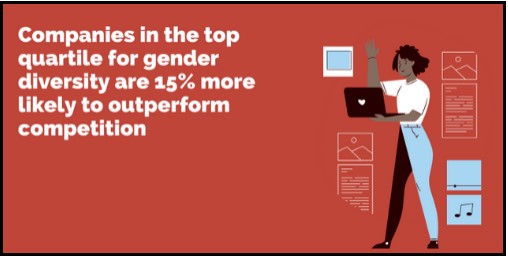
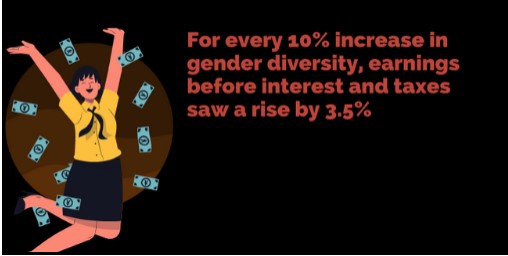
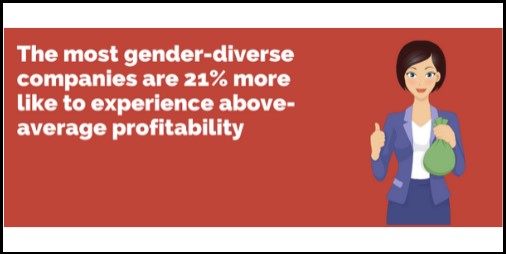
And that’s because women have emerged as more effective leaders in today’s world. There is no dearth of research on how women score equal or higher in most leadership skills. Women have proved to be better leaders during crises, including in managing the recent COVID-19 pandemic.
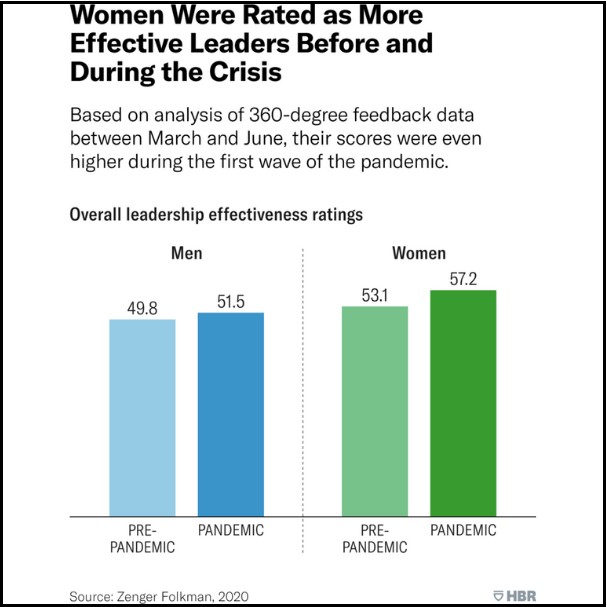

So you may ask what’s the issue?
As you discovered in this article, we have troves of data on how women have proved to be more effective leaders and that their presence leads to real business impact.
Unfortunately, the one place we wish we had better data to share is women’s representation in the workforce especially in leadership positions.
- Women represent 45% of the S&P 500 workforce, but only 4% are CEOs.
- Globally, women hold just 24% of senior leadership positions
- In a study of nearly 22,000 publicly traded organizations worldwide, 60% have no female board members.
Why is women's representation at work dismal?
A one size fits all approach does not work for women professionals as they find themselves confronted with some unique challenges at work.
In our conversations with women professionals, we hear them articulate so many of these challenges that are well-documented through research:
- Women leaders find themselves in a ‘double bind’ when gender stereotypes end up binding them in difficult situations
a. They are seen as too soft (likeable, but incompetent) or too tough (competent, but unlikeable) but never just right
b. The ‘think leader, think male’ mindset creates an invisible barrier for women where women leaders work twice as hard as men for the same recognition - “Senior-level women are also nearly twice as likely as women overall to be ‘Onlys’ -the only or one of the only women in the room at work. They are more likely than women who work with other women, to feel pressure to work more, and to experience microaggressions, including needing to provide additional evidence of their competence.”
- There are studies on how people and companies commonly misinterpret displays of confidence as a sign of competence, which tends to put men at a position of advantage as they come across as more confident
- COVID-19 pandemic has further intensified challenges that women already faced. Senior-level women are significantly more likely than men, at the same level, to feel burned out and under pressure to work more, and “as though they have to be ‘always on.’” They are 1.5 times more likely, than senior-level men, to think about downshifting their role, or leaving the workforce altogether due to the pandemic. Almost three in four cite burnout as the main reason.
- Women leaders find themselves in a ‘double bind’ when gender stereotypes end up binding them in difficult situations
What do we need to do to address this issue?
While we can’t change the world, we can certainly enable and empower women professionals to navigate through these realities with the courage, confidence and the right skill-sets. What’s needed is to enable women to discover their authentic voice and lead their life with balance, fulfillment and growth.
If the challenges facing women professionals are different, the solutions too need to be tailored to their specific needs.
Interested to know what these solutions can be? Read-on!
How Evolve is helping women professionals grow in their journeys?
Non-customized leadership journeys rarely work because they don’t factor in the realities of women in the corporate world. The realities of the 21st century post-pandemic world have added further complexities to women professional journeys that require to be recognized and acted upon by organizations.
Based on these insights, we have been working with several global corporations through Evolve, our unique offering tailored to the needs of their women professionals across ranks and functions.
Evolve by TransforMe is a transformational development journey for women professionals, created to address these realities and unique challenges faced by them. Evolve catalyzes an internal journey that helps women professionals evolve and unleash their fullest potential by:
- Getting in touch with their authentic self
- Recognizing their internal barriers and
- Discovering skills to elevate their growth
For Diversity, By Diversity
This unique learning journey is designed by a team that breathes Diversity &Inclusion. It is led by world-class facilitators with decades of experience in D&I work.
Apart from deep expertise, it is the values that this team, led by women and men representing varied ethnic backgrounds, LGBTQ+ and unique cultural backgrounds, brings on-board that adds authenticity to the journey.
Rooted In Research, Leveraging Unique Methodologies
We leverage primary and secondary research to gain a deeper understanding of the real challenges faced by women professionals. The Evolve learning journey is designed using pattern-breaking transformational methodologies like T-group, Gestalt, Neuroscience, Projective cards and more.
Inspired by the work of thought leaders such as Brene Brown, Sheryl Sandberg among others, Evolve helps women professionals recognise and realise their potential.
Evolve Framework
Take a look at the Evolve framework optimised to create breakthrough experiences at every stage enabling women professionals to drive real change.

Here is what some of the women professionals who have been on this journey with us have shared about their experience.
What are your goals when it comes to nurturing a gender-diverse team?
What are the challenges in the path of women professionals in your organization?
If you would like to learn more about creating a meaningful learning journey for your team of women professionals or if you simply want to chat about your experiences and challenges, write to us at connect@transformelearning.com.
Stay inspired, visit us on our website, join us on Facebook and LinkedIn.
In this conversation, we will have a unique perspective on the topic of coaching . We have Rakesh Negi, Senior Vice President – Business Operations, FCM Travel who has over 22 years of experience in the travel industry. He will share his perspective on how Coaching has unleashed him.
Summary
- The conversation is between Sandra Colhando and Rakesh Negi, who has been coached as a leader in his organization.
- Rakesh was introduced to coaching six years ago by his CEO, and initially had reservations about whether he needed it.
- He realized that coaching is about asking questions to help the coachee find their own path and take ownership of their journey.
- Rakesh found coaching to be a valuable gift that helped him gain self-awareness, confidence, and make sustained changes in his personal and professional life.
- To create a successful coaching environment, it’s important for sponsors to clearly articulate goals and dispel myths about coaching, while coachees need to approach coaching conversations without anxiety or fear of failure. There is no such thing as a bad coach, but finding the right coach for a particular situation is important.
Sandra Colhando:
As a leader who has been coached, can you walk us through how you first got introduced to coaching and what was going through your mind at the time?
Rakesh Negi:
Interesting one and frankly I didn’t know about coaching at all. It was some six years back when I was working on my work desk and my CEO tapped on my shoulder and said, let’s talk, that’s the first time he said “As an organisation, for your development, we’re going to assign you coaching and assign you up with the coach.”
I wasn’t sure what this is because as a person, I’ve always seen myself as somebody who makes a difference quickly and always in the top of the working cadre, it was almost like a bomb was dropped on me. Do I need coaching, that’s the question that came into my mind. And maybe because my CEO was very well aware, he saw that big question mark on my face and he started explaining how and what is going to be the entire concept and how is it going to help me? I’m glad that I had that kind of unflinching trust on him that I went ahead in the journey and of course after that it was my coach, which is you in this case, which helped me give me that confidence and I was able to carry on with the journey.
Sandra:
One myth about coaching is the belief that being coached means you’re not doing well enough. This is not the case, as coaching is an expensive intervention that organizations invest in for high potential individuals they want to grow within the organization.
Rakesh Negi:
In fact, I would say in the first two sessions only I was able to clearly see in my mind that there are not one, not two, but three forces working for my development one definitely organisation, one my CEO and one of course my coach, all I need to do is just plunge into this and just run with this journey.
Sandra Colhando:
As a leader who has been coached, can you walk us through how you first got introduced to coaching and what was going through your mind at the time?
Rakesh Negi:
Interesting one and frankly I didn’t know about coaching at all. It was some six years back when I was working on my work desk and my CEO tapped on my shoulder and said, let’s talk, that’s the first time he said “As an organisation, for your development, we’re going to assign you coaching and assign you up with the coach.”
I wasn’t sure what this is because as a person, I’ve always seen myself as somebody who makes a difference quickly and always in the top of the working cadre, it was almost like a bomb was dropped on me. Do I need coaching, that’s the question that came into my mind. And maybe because my CEO was very well aware, he saw that big question mark on my face and he started explaining how and what is going to be the entire concept and how is it going to help me? I’m glad that I had that kind of unflinching trust on him that I went ahead in the journey and of course after that it was my coach, which is you in this case, which helped me give me that confidence and I was able to carry on with the journey
Sandra:
One myth about coaching is the belief that being coached means you’re not doing well enough. This is not the case, as coaching is an expensive intervention that organizations invest in for high potential individuals they want to grow within the organization.
Rakesh Negi:
In fact, I would say in the first two sessions only I was able to clearly see in my mind that there are not one, not two, but three forces working for my development one definitely organisation, one my CEO and one of course my coach, all I need to do is just plunge into this and just run with this journey.
Rakesh Negi:
I wanted to avoid being remembered as a ‘reluctant’ leader, which made me realize that I lacked confidence and was not claiming my own space. Coaching has been the greatest gift I’ve ever received, helping me both professionally and personally. It has been a realization on both sides, making it the best gift.
Sandra Colhando:
This may be a rhetorical question. Does coaching actually work? Did you feel coaching and able to bring some real shifts and not just real shifts, but sustained change in your life?
Rakesh Negi:
I wanted to do philanthropy in my hometown, but never acted on it until my coach helped me set a goal. I was able to accomplish it before turning 40 and it continues to bring me happiness. Coaching also heightened my self-awareness, allowing me to recognize and correct my mistakes. This led me to seek coaching again, and the second time was even more successful since I was already aware of the journey
Sandra Colhando:
I connect with the idea that everyone needs a coach at different times for different situations. I’ve had coaches in different phases of my life and I believe even the best athletes need coaches. I personally need help wherever it’s required and having an external, non-judgmental perspective can be invaluable.
I had an Aha moment that changed my whole perspective on silence. I grew up believing silence is golden, but a mentor and coach, Dr. Prabhakar Kamath, taught me that silence can be hurtful. This one statement shook me and made me realize that staying silent can actually do more harm than good. Now, I remind myself to speak up when it’s necessary, even if it means supporting someone at the cost of my relationship with another person.
Rakesh Negi:
Taking ownership of your own situation is important, and during our discussions, I learned how to separate a person’s behavior from who they are. It’s essential to talk openly with them and manage conflicts positively.
Sandra Colhando:
How can organisations or leaders create an environment for coaches to succeed?
Rakesh Negi:
To ensure a successful coaching intervention, the sponsor must clearly articulate the goals and objectives. Additionally, it’s important to have a mirror, either the coachee or someone within the organization, to ensure progress is being made. It’s crucial to dispel any myths about coaching, such as it being a precursor to termination, by openly discussing the purpose and benefits of coaching. This will ensure people understand that coaching is about personal growth and development.
Sandra:
That’s a great starting point. When the coachee understands that the intention is for their success and development, they can approach coaching conversations without anxiety or fear of failure. They can focus on the process, trusting that the environment will take care of the outcomes.
Sandra Colhando:
Is there a bad coach? With so many coaches out there and now, who are qualified and who may tick all the boxes – How does one go about picking the right coach for themselves?
Rakesh NegI:
As a coach, I don’t know if I’m the right person to answer this, but in my opinion, there’s no such thing as a bad husband or wife. There can be a bad marriage, but the starting point for any person seeking coaching is to be coachable and self-aware.
From my perspective, as long as a person is genuinely interested in their personal growth and development, they cannot be considered “bad”. As coaches, we are trained to work with all types of individuals and personalities. While some people may initially be resistant to coaching, it’s possible for them to become coachable at some point in their journey.
I often share an anecdote with my clients – forced change is only liked by an infant who has wet the nappy, otherwise, nobody likes forced change. It’s important to recognize that change is a process and individuals need to be open to it in order to truly benefit from coaching.
Sandra Colhando:
What are three cues to identify the right coach for yourself?
Rakesh Negi:
To find the right coach, it’s not about three things but more about the coach’s interest in your journey, which can be determined within 5 to 10 minutes of talking to them. It’s about seeing if the coach is willingly listening, interested in you, and running the journey with you, allowing for open communication.
Rakesh:
Dating and coaching are similar in that you can usually tell within the first 15-20 minutes if there is a connection. It’s more about the emotional connection and confidence you feel from the coach rather than their profile. Being intuitive works better than just looking at their profile.
Sandra Colhando:
When looking for a coach, it’s more important to focus on how you feel around them rather than their experience or profile. Ask yourself if you feel safe and comfortable with the coach and if you can have multiple conversations with them. Don’t limit yourself to coaches with the same experience as you, as coaching is about unlocking potential rather than finding a mentor. Look for a coach who can walk the journey with you, create a safe space for exploration, give honest feedback, and push you when needed.
Sandra Colhando:
What are the signs of successful coaching that one should look for?
Rakesh Negi:
Congratulations on reaching this point, now it’s time to trust the coaching process and your unique talents. A good coach will guide and challenge you, and it’s important to have someone you trust to hold you accountable and reflect your progress. This will help you get the most out of coaching and create positive change in your life.
Sandra Colhando:
I’ve never met anyone unhappy with coaching. Having a trusted mirror can help people acknowledge and reflect on the changes they are making, especially when they want others to notice too.
Rakesh Negi:
I learned a technique from my coach about keeping anchors, and I still use it today. One of my anchors is a picture of a waltz dance that I keep. Another anchor is the phrase “that’s a beautiful story,” which reminds me how to use words effectively in conversations and negotiations. I even shared a time when I used this technique with my coach and received positive feedback.
Sandra:
Would you like to share with the larger group that wants an analogy, the story. What does waltz mean?
Rakesh:
I wasn’t sure how to talk to a customer without offending them. The waltz analogy of taking one step forward and one step back was shared with me, and it’s a beautiful way to approach conversations. By giving and pulling back, the other person feels in control and it creates a positive dynamic. It takes two to tango, and this approach helps build trust and rapport with customers.
Sandra Colhando:
What are your thoughts on coaching through a tech platform, such as AI or picking a coach profile from a platform, and where can one find a coach if not through corporate sponsorship
Rakesh Negi:
Recently, a close friend who lost his job reached out to me for coaching. While Google can provide answers, I believe it’s important to find a coach who offers a human touch and emotional support. Bots and systems lack this important aspect. I suggest reaching out to your larger circle for a coach, as they can offer a more authentic and personal experience.
How Can Managers Become Coaches
Sandra Colhando:
Can managers be taught to become coaches, or are coaches different from mentors?
Rakesh Negi:
We need more coaches than managers in today’s talent world. Managers should focus on coaching their people rather than managing them. It’s doable and managers can be trained to become coaches. Coaching gives clarity of larger goals and allows talented individuals to know what needs to be done.
Sandra Colhando:
Mentoring and coaching are distinct from each other, and as a manager, it’s easier to mentor as you can guide from experience. Coaching requires time, patience, and a specific skill set, which can be challenging for managers who are busy with deadlines. However, both skills are important and have their timing. It’s crucial to have the necessary skill set for coaching.
Sandra Colhando:
Are external coaches preferred compared to Internal coaching in organization?
Rakesh Negi:
Both internal and external coaches can be effective, but the external coaches may have a slight edge because they are not as involved in the day-to-day work of the coachee.
Sandra Colhando:
Both internal and external coaches have their own space and importance. While internal coaches can cover more people who may not have access to external coaches, external coaches can provide a specific skill set, speed or a massive shift in a person or group of leaders. So, it’s a great combination between the two.
In the 3rd edition of The Leaders’ Cafe, we invited our fellow coach Francisco Ramirez and Founder, OkaySo, a non-profit based out of New York that combats shame, stigma and misinformation working on LBTQIA+ inclusion. This conversation on the sidelines of the PRIDE month focused on the importance of LGBTQIA+ inclusion in the workplace.
Summary
Francisco highlighted that true participation in the PRIDE movement requires listening to the voices of the community, including their personal struggles and aspirations. They highlighted the struggles queer youth face in gaining acceptance and the need for compassion. They discussed common mistakes organizations make in supporting the LGBTQIA+ community, such as performative support and focusing only on celebration instead of advocacy. Francisco suggested some initiatives organizations can take to promote inclusion, such as policies against discrimination and gender-neutral job postings. They also offered tips for individuals to become allies, including recognizing their own knowledge gaps and using appropriate pronouns. Lastly, Francisco addressed how to respond to homophobic comments, emphasizing the importance of acknowledging one’s own feelings and taking action to challenge harmful behavior.
Chat Brief
A common mistake that organisations make is in thinking this work is just a celebration. Sure, we should celebrate who we are but it’s NOT a celebration when we still don’t have rights.
The last few years have witnessed a growing awareness about the importance of LGBTQIA+ inclusion in key social spaces and most importantly the workspace. The PRIDE month in June at its best becomes an opportunity for organisations to renew their commitment to the issue, announce a slew of benefits and policies to ensure that the LGBTQIA+ community is well represented and respected within workspace.
The advocates and supporters of the PRIDE movement have also felt sceptical about the phenomenon of rainbow marketing where the gravity of the issue is lost amidst buzzy promotions.
We believe that the route to authentic participation in the PRIDE movement lies in listening to the voices from the community – their personal history, their present struggles and triumphs, their dreams for the future and their hopes and expectations from society.
We were privileged to host one such insightful conversation with an inspiring leader from the LGBTQIA+ community who distilled their own personal struggles and emerged as a role model, guide and a leadership coach not just for the community but for all those seeking to reach their potential support in life. In June, Sandra Colhando, our colleague and Co-Founder at TransforMe spoke with Francisco Ramirez, Founder, OkaySo, a non-profit based out of New York that combats shame, stigma and misinformation.
Here are a few excerpts from the conversation.
Choosing identities
Francisci spoke about how struggle for self and social acceptance is a part of every teenager’s journey and they witnessed personally how magnified this struggle for acceptance is as a queer youth as they came out at an age of 15 years. They shared how majority of queer youth have contemplated or attempted suicide signaling the gravity of community’s exclusion and its painful consequences.
Francisco started the conversation with a positive affirmation for every person from the community who experiences the struggle – “We can do this. You can do this.”
A key moment in the conversation was an insightful question by Sandra – “From being told to not come out completely to being someone who understands others completely – how have you bridged that distance?” . As Francisco shared later in the conversation, “Compassion is our biggest superpower”
Common mistakes that organisations make
Francisco spoke about two common mistakes that organisations make vis a vis the LGBTQIA+ community and the PRIDE movement. They pointed out how support has become ‘performative’ , how social media handles of different organisations portray their support, specifically in the month of June, yet do little to help the cause. They spoke about the need to support the movement through the year.
The second point that they shared is, “a common mistake that organisations make is in thinking this work is just a celebration. Sure, we should celebrate who we are but it’s NOT a celebration when we still don’t have rights.
What organisations can do to make LGBTQIA+ inclusion real?
Francisco spoke about a range of initiatives that organisations can take for LGBTQIA+ inclusion at work. Some of the key aspects they spoke about were:
- Policies to address discrimination, bullying and exclusion
- Dress code, signages on bathrooms.
- Recruitment based on skills and knowledge instead of prioritising who you are and identify as.
- Gender neutral job postings.
- Challenge gendered language and using appropriate pronouns
What can individuals do to become an Ally?
Francisco offered some very actionable steps through the conversation. One simple but powerful step that they offered for any individual wanting to make a difference is:
`Recognize where you are.’
They spoke about the need to understand where our current gaps lie – example in awareness about the spectrum of identities or in the appropriate language to address them respectfully and then working towards raising awareness and learning to fill those gaps.
They spoke about the need to be honest, to not be scared of making a mistake and how even the acknowledgement of a mistake can signal the sincere intent to participate in the journey of fostering inclusion.
About the role of language and need for using the right pronouns
Francisco made a powerful point here sharing how – “the language of ladies and gentlemen is so ingrained that I have heard many people say what a chore it is to change and relearn and sure it takes thinking and conscious effort but I would say what an opportunity to try to be more inclusive.”
Addressing a question on how to ask people how they like to be identified as, Francisco had a simple suggestion. They shared that we can request other people to share their preferred names and pronouns.
On responding to homophobic comments
When people say these sorts of things, it’s not because they are inherently bad but because they have been socialised to believe whatever they believe. So there is an opportunity for joint gesturing, offering support. You can do this by first recognising your reaction, validating your own feelings, gathering your thoughts to feel strong to take action and finally name what you see.
Francisco highlighted the importance of tuning in to our own reactions and responses, centering and acknowledging how the comment made us feel and then taking the courage to share the feelings it brought forth (“sorry that doesn’t sound right, “umm did I hear that right”). They made an interesting point about how dissent can be shared in varied ways including through vocal fillers.
Conclusion
We are excited about building some of Francisco’s ideas and actionable insights in our own work and in helping our colleagues, partners and clients in their journey of raising awareness, becoming more empathetic and open and driving behavioural change to become the best version of ourselves.
We do hope you find them valuable in your journey towards Inclusion.
Listening is one of the most difficult skills on the planet,” says Nicole Lipkin, author of What Keeps Leaders Up At Night.
It’s very hard to stop your mind from wandering . You can always tell when someone’s not giving you their complete attention. Most of us in the workplace are so overwhelmed with things to do—instant messaging, phones ringing.
Listening can feel at times like a lost art, maybe because we are communicating so much more electronically. Being a good listener can help you in every aspect of your life – with family and friends, and with your colleagues at work.
Here are a few exercises that leaders should use to test their ability to suspend judgement and really hear what the other person is saying.
- Stop interrupting -This will be hard to do, but try not to finish the other person’s sentence. You often do this because you think you know what the other person is thinking, but this isn’t always true. In fact, it’s often not true. Our brains are wired to share what we want to hear and we will look for information that supports what we want to see and hear and ignore everything else.
- Listen for feelings – People do not always express their feelings or concerns directly, especially to their bosses. Pay attention to words that express feelings or needs and to nonverbal behaviors that may reflect how someone feels.
- Use Body Language – Body language is an important tool to ensure you do this. The correct body language makes you a better active listener and therefore more ‘open’ and receptive to what the speaker is saying. At the same time, it indicates that you are listening to them.
Learning body language can feel odd, and it’s likely you’ll be doing some of these already without being aware of them. However, the more conscious you are of these four factors the easier active listening will be for you.
– Make sure you face the speaker
– Move closer to the speaker
– Incline your head towards the speaker
– Hold eye contact for longer - Acknowledge what the person said. This is where you tell the person what you think after acknowledging the person’s contribution. Lipkin advises not to criticize what they say, but be genuinely honest about your opinions. This is how you build a relationship.
- Repeat what you heard back to the person. You should always paraphrase what you think the person said. Paraphrasing helps you check for accuracy and understanding.
You should also take note of the person’s tone of voice, because often people will say one thing that seems angry, but they’re actually not. Sometimes this is a cultural thing.
Active listening is an important social skill that has value in many social settings. Practise it often, and it will become your second nature.

TransforMe Learning is a globally focused leadership training and coaching company in Sydney. We provide leadership training, executive coaching, and team transformation to better prepare individuals and organisations for the future of work.
TransforMe Learning acknowledges the Traditional Owners of Country throughout Australia. We pay our respects to Elders past and present.